NUSA TENGGARA The Land of the Dragons
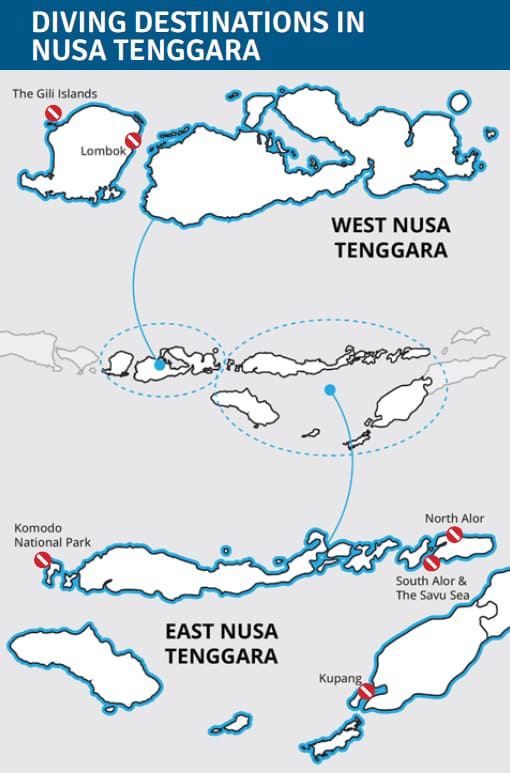 Nusa Tenggara, stretching from Lombok to Timor, boasts a diverse range of landscapes—from tropical forests to dry scrubland and varied underwater environments. Known for its endemic species, such as the Komodo Dragon, the region has a dry southern climate that supports farming and fishing, with minimal industry and mass tourism. The northern islands grow rice, while the south relies on drought-resistant crops. The main cities are Mataram and Kupang, with travel between islands accessible by plane or boat.
Western Nusa Tenggara Diving Overview
Western Nusa Tenggara offers a wide range of diving conditions—from calm, beginner-friendly waters in the Gili Islands to strong currents in South Lombok and Alor. With its diverse topography and rich marine life, the region suits divers of all levels. Conditions vary by location, so refer to area-specific guides for details. In remote areas, dive gear may be limited; bring your own or notify the operators in advance. Most dives are non-decompression, with depth limits of 25–30 meters and typical durations of 60 minutes. Some liveaboards require Nitrox certification. Visibility and temperature can vary, so check with local operators and pack extra thermal layers if needed.
Diving Conditions
Western Nusa Tenggara is famed for exhilarating drift dives in the strong currents of the Komodo and Sape Straits. Divers encounter vibrant coral walls, pinnacles, reef flats, and pelagic-rich cleaning stations. While many sites suit experienced divers, sheltered areas around the Gilis and northern Komodo offer ideal conditions for beginners and training.
Dive Site and Marine Life Highlights in Western NUSA TENGGARA
The Gili Islands offer crystal-clear waters, vibrant corals, and abundant reef life—perfect for divers of all levels. For more advanced dives, Shark Point and Deep Turbo offer deeper and more challenging conditions. Lombok boasts a diverse range of sites, from serene reefs and muck dives to pinnacles teeming with hammerhead sharks and mobula rays, catering to every diver's preference. Western Nusa Tenggara is also excellent for freediving, with the Gili Islands hosting schools for all levels. Gili Islands offers freedivers a chance to swim with manta rays, while Sekotong features colorful, beginner-friendly reefs.
Eastern Nusa Tenggara Diving Overview
Eastern Nusa Tenggara offers a more remote travel experience, with dive resorts typically requiring advance booking. Liveaboards, ranging from budget to luxury, operate across Nusa Tenggara—some covering Raja Ampat and Maluku, while others focus on Komodo, with trips lasting 3 - 14 days. Komodo National Park is a premier dive destination, home to manta rays, sharks, and vibrant reefs. While some sites have strong currents, there are also calmer spots suitable for all levels. The best time to dive is during the dry season (March to December), with October and November often providing the best conditions.
Diving Conditions
Eastern Nusa Tenggara offers dramatic topography and powerful, shifting currents. Alor is a highlight, known for pristine reefs, large fish, and rare critters like rhinopias. Most sites are suitable for intermediate to advanced divers, although sheltered spots are also available for beginners.
Dive Site and Marine Life Highlights in Eastern NUSA TENGGARA
The Alor Archipelago boasts remote dive sites teeming with marine life, ranging from coral seamounts and muck dives to walls and drop-offs. Healthy reefs and abundant fish create a unique, uncrowded experience. Cavern and cave divers can explore Oehani and Crystal Caves near Kupang. For snorkelers and freedivers, North and South Alor offer pristine beaches and quiet snorkeling spots far from typical tourist crowds.
NUSA TENGGARA The Land of the Dragons
Nusa Tenggara, stretching from Lombok to Timor, boasts a diverse range of landscapes—from tropical forests to dry scrubland and varied underwater environments. Known for its endemic species, such as the Komodo Dragon, the region has a dry southern climate that supports farming and fishing, with minimal industry and mass tourism. The northern islands grow rice, while the south relies on drought-resistant crops. The main cities are Mataram and Kupang, with travel between islands accessible by plane or boat.
Western Nusa Tenggara Diving Overview
Western Nusa Tenggara offers a wide range of diving conditions—from calm, beginner-friendly waters in the Gili Islands to strong currents in South Lombok and Alor. With its diverse topography and rich marine life, the region suits divers of all levels. Conditions vary by location, so refer to area-specific guides for details. In remote areas, dive gear may be limited; bring your own or notify the operators in advance. Most dives are non-decompression, with depth limits of 25–30 meters and typical durations of 60 minutes. Some liveaboards require Nitrox certification. Visibility and temperature can vary, so check with local operators and pack extra thermal layers if needed.
Diving Conditions
Western Nusa Tenggara is famed for exhilarating drift dives in the strong currents of the Komodo and Sape Straits. Divers encounter vibrant coral walls, pinnacles, reef flats, and pelagic-rich cleaning stations. While many sites suit experienced divers, sheltered areas around the Gilis and northern Komodo offer ideal conditions for beginners and training.
Dive Site and Marine Life Highlights in Western NUSA TENGGARA
The Gili Islands offer crystal-clear waters, vibrant corals, and abundant reef life—perfect for divers of all levels. For more advanced dives, Shark Point and Deep Turbo offer deeper and more challenging conditions. Lombok boasts a diverse range of sites, from serene reefs and muck dives to pinnacles teeming with hammerhead sharks and mobula rays, catering to every diver's preference. Western Nusa Tenggara is also excellent for freediving, with the Gili Islands hosting schools for all levels. Gili Islands offers freedivers a chance to swim with manta rays, while Sekotong features colorful, beginner-friendly reefs.
Eastern Nusa Tenggara Diving Overview
Eastern Nusa Tenggara offers a more remote travel experience, with dive resorts typically requiring advance booking. Liveaboards, ranging from budget to luxury, operate across Nusa Tenggara—some covering Raja Ampat and Maluku, while others focus on Komodo, with trips lasting 3 - 14 days. Komodo National Park is a premier dive destination, home to manta rays, sharks, and vibrant reefs. While some sites have strong currents, there are also calmer spots suitable for all levels. The best time to dive is during the dry season (March to December), with October and November often providing the best conditions.
Diving Conditions
Eastern Nusa Tenggara offers dramatic topography and powerful, shifting currents. Alor is a highlight, known for pristine reefs, large fish, and rare critters like rhinopias. Most sites are suitable for intermediate to advanced divers, although sheltered spots are also available for beginners.
Dive Site and Marine Life Highlights in Eastern NUSA TENGGARA
The Alor Archipelago boasts remote dive sites teeming with marine life, ranging from coral seamounts and muck dives to walls and drop-offs. Healthy reefs and abundant fish create a unique, uncrowded experience. Cavern and cave divers can explore Oehani and Crystal Caves near Kupang. For snorkelers and freedivers, North and South Alor offer pristine beaches and quiet snorkeling spots far from typical tourist crowds.
LOMBOK
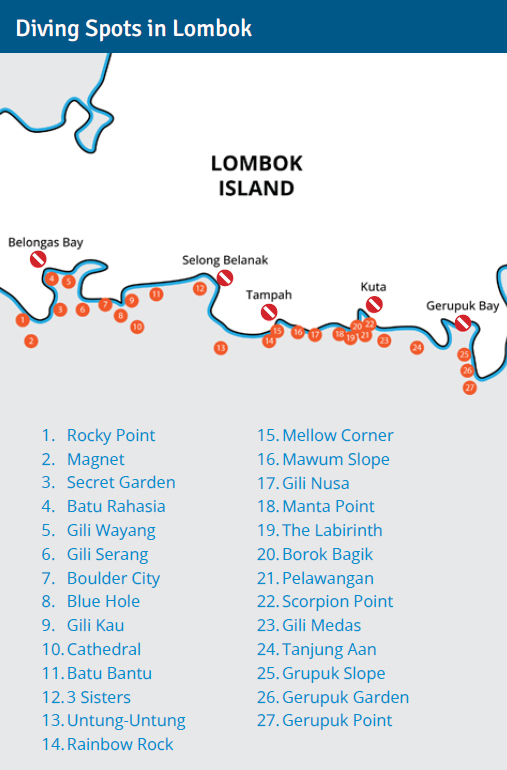 Lombok offers adventure and natural beauty with pristine beaches, rugged cliffs, and volcanoes, making it a less touristy alternative to Bali. It’s ideal for exploration, culture, and outdoor activities like surfing, yoga, and trekking Mount Rinjani. Sekotong offers relaxed, biodiverse reefs, while remote Belongas Bay—known for its calm waters and friendly atmosphere—draws divers with encounters of big fish. Lombok’s easy access by boat, domestic, and international flights makes it a prime destination for marine life without the crowds.
How To Get There
- Fly to Lombok International Airport (LOP)
- Transfer by car to Sekotong (1 - 1.5 hours) or Belongas Bay (1.5 hours)
- Fly to Bali Ngurah Rai International Airport (DPS)
- Transfer by car to Padangbai (1.5 hours) for ferry transfer.
- Ferry trip to Lembar harbour (Lombok) (4-6 hours)
Diving Conditions
Lombok features sites for all levels, from gentle reefs to advanced, high-energy dives. Belongas Bay challenges experienced divers with surges, updrafts, and negative entries, while Sekotong provides shallow, warm, calm waters ideal for beginners. More seasoned divers can also enjoy drifts and deeper sites.
Visibility : 10 - 25 m
Best Time : Apr - Oct
South coast sees cooler waters Jul–Sep (24–27°C).
Dive Site and Marine Life Highlights in Lombok
Lombok is rich in pelagic marine life, with frequent sightings of hammerhead sharks, mobula rays, tuna, trevally, barracuda, reef sharks, and turtles, alongside a variety of other creatures, including nudibranchs, frogfish, and octopus. In Belongas Bay, The Magnet is a standout site, attracting large pelagics like hammerheads, reef sharks, and barracuda. The Lighthouse is known for its vibrant marine life, including schools of sweetlips and white-tip reef sharks. Stairs to Medang offer a vibrant coral garden and seasonal sightings of manta rays, reef sharks, and ammerheads. At the same time, Cathedral features eagle rays, hunting trevally, and a rich array of macro life. Gili Sarang occasionally hosts mobula rays, and Small Gili Ringgit is a favorite for macro photography, with ghost pipefish, crustaceans, and bluespotted stingrays. For freedivers, these sites offer excellent conditions, combining clear water and vibrant reef life with the opportunity to encounter pelagics at various depths. The region suits both beginners and advanced freedivers, with many calm and accessible locations perfect for minimal-equipment exploration.
LOMBOK
Lombok offers adventure and natural beauty with pristine beaches, rugged cliffs, and volcanoes, making it a less touristy alternative to Bali. It’s ideal for exploration, culture, and outdoor activities like surfing, yoga, and trekking Mount Rinjani. Sekotong offers relaxed, biodiverse reefs, while remote Belongas Bay—known for its calm waters and friendly atmosphere—draws divers with encounters of big fish. Lombok’s easy access by boat, domestic, and international flights makes it a prime destination for marine life without the crowds.
How To Get There
- Fly to Lombok International Airport (LOP)
- Transfer by car to Sekotong (1 - 1.5 hours) or Belongas Bay (1.5 hours)
- Fly to Bali Ngurah Rai International Airport (DPS)
- Transfer by car to Padangbai (1.5 hours) for ferry transfer.
- Ferry trip to Lembar harbour (Lombok) (4-6 hours)
Diving Conditions
Lombok features sites for all levels, from gentle reefs to advanced, high-energy dives. Belongas Bay challenges experienced divers with surges, updrafts, and negative entries, while Sekotong provides shallow, warm, calm waters ideal for beginners. More seasoned divers can also enjoy drifts and deeper sites.
Visibility : 10 - 25 m
Best Time : Apr - Oct
South coast sees cooler waters Jul–Sep (24–27°C).
Dive Site and Marine Life Highlights in Lombok
Lombok is rich in pelagic marine life, with frequent sightings of hammerhead sharks, mobula rays, tuna, trevally, barracuda, reef sharks, and turtles, alongside a variety of other creatures, including nudibranchs, frogfish, and octopus. In Belongas Bay, The Magnet is a standout site, attracting large pelagics like hammerheads, reef sharks, and barracuda. The Lighthouse is known for its vibrant marine life, including schools of sweetlips and white-tip reef sharks. Stairs to Medang offer a vibrant coral garden and seasonal sightings of manta rays, reef sharks, and ammerheads. At the same time, Cathedral features eagle rays, hunting trevally, and a rich array of macro life. Gili Sarang occasionally hosts mobula rays, and Small Gili Ringgit is a favorite for macro photography, with ghost pipefish, crustaceans, and bluespotted stingrays. For freedivers, these sites offer excellent conditions, combining clear water and vibrant reef life with the opportunity to encounter pelagics at various depths. The region suits both beginners and advanced freedivers, with many calm and accessible locations perfect for minimal-equipment exploration.
THE GILI ISLANDS (Trawangan, Air & Meno)
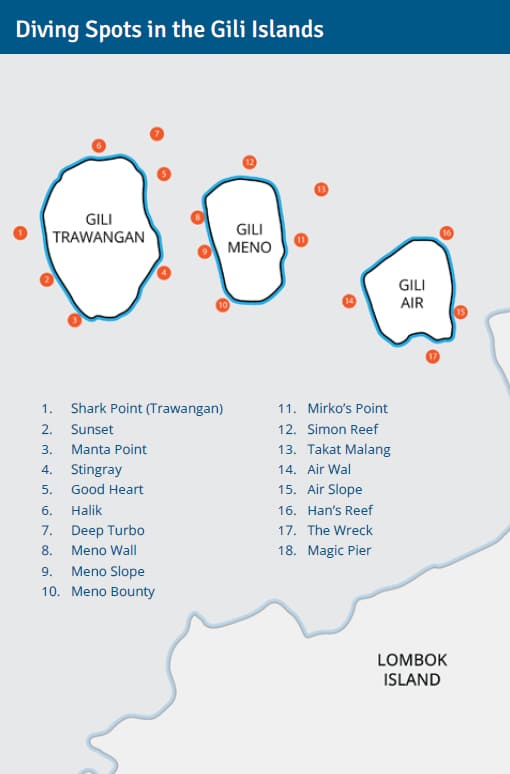 The Gili Islands—Gili Trawangan, Gili Meno, and Gili Air— are known for their white sand beaches and turquoise waters. Gili Trawangan is the most vibrant, Gili Meno the quietest, and Gili Air offers a laid-back vibe with the largest local population. Once pristine mangrove habitats, the islands began developing in the 1970s, with tourism expanding in the 1980s. Today, Gili Trawangan attracts beachgoers and nightlife seekers, Gili Meno offers seclusion, and Gili Air is popular with honeymooners. The islands have a dry microclimate, with most rain falling between November and April. Car-free and tranquil, transport is by bicycle or pony cart. Access is easiest by boat from Bali, though connections from Lombok are also available.
How To Get There
- Fly to Lombok International Airport (LOP)
- Transfer by car to Bangsal Harbour (2 hours) for boat transfer
- A short boat ride to the Gilis (30 minutes)
- Fly to Bali Ngurah Rai International Airport (DPS)
- Transfer by car to Pantai Matahari Terbit in Sanur (40 minutes) or Padangbai (1.5 hours) for boat transfer
- Fast boat to Gili Islands, from Sanur (2.5 - 3.5 hours) or Padangbai (1.5 - 2.5 hours)
Diving Conditions
Diving in the Gili Islands is easy and accessible yearround, with calm, clear waters that are ideal for beginners and training courses. The islands are also a hub for freediving, with many schools available. More experienced divers can enjoy deeper sites and drift dives with mild to moderate currents. Most dives are on gently sloping reefs, with shallow reef tops perfect for beginners and snorkelers.
Visibility : 10 - 25 m
Best Time : May - Sep
Mild seasonal cooling Jul–Sep (26–28°C)
Dive Site and Marine Life Highlights in the Gili Islands
The Gili Islands are a diver’s paradise, home to green and hawksbill turtles, reef sharks, tuna, barracuda, and trevally, as well as a variety of reef fish, including sweetlips, pufferfish, and butterflyfish. Notable dive sites include Shark Point, known for large marine life; Turtle Heaven off Gili Meno; and Deep Turbo, with rich coral gardens and occasional blacktip reef sharks. Sites like Simon’s Reef and Sunset also showcase vibrant coral and a diverse array of species. Snorkelers and freedivers will appreciate the abundant turtles and clear, shallow waters, perfect for drift snorkeling. The islands are also a hub for freediving, with schools offering courses and guided trips for all skill levels.
THE GILI ISLANDS (Trawangan, Air & Meno)
The Gili Islands—Gili Trawangan, Gili Meno, and Gili Air— are known for their white sand beaches and turquoise waters. Gili Trawangan is the most vibrant, Gili Meno the quietest, and Gili Air offers a laid-back vibe with the largest local population. Once pristine mangrove habitats, the islands began developing in the 1970s, with tourism expanding in the 1980s. Today, Gili Trawangan attracts beachgoers and nightlife seekers, Gili Meno offers seclusion, and Gili Air is popular with honeymooners. The islands have a dry microclimate, with most rain falling between November and April. Car-free and tranquil, transport is by bicycle or pony cart. Access is easiest by boat from Bali, though connections from Lombok are also available.
How To Get There
- Fly to Lombok International Airport (LOP)
- Transfer by car to Bangsal Harbour (2 hours) for boat transfer
- A short boat ride to the Gilis (30 minutes)
- Fly to Bali Ngurah Rai International Airport (DPS)
- Transfer by car to Pantai Matahari Terbit in Sanur (40 minutes) or Padangbai (1.5 hours) for boat transfer
- Fast boat to Gili Islands, from Sanur (2.5 - 3.5 hours) or Padangbai (1.5 - 2.5 hours)
Diving Conditions
Diving in the Gili Islands is easy and accessible yearround, with calm, clear waters that are ideal for beginners and training courses. The islands are also a hub for freediving, with many schools available. More experienced divers can enjoy deeper sites and drift dives with mild to moderate currents. Most dives are on gently sloping reefs, with shallow reef tops perfect for beginners and snorkelers.
Visibility : 10 - 25 m
Best Time : May - Sep
Mild seasonal cooling Jul–Sep (26–28°C)
Dive Site and Marine Life Highlights in the Gili Islands
The Gili Islands are a diver’s paradise, home to green and hawksbill turtles, reef sharks, tuna, barracuda, and trevally, as well as a variety of reef fish, including sweetlips, pufferfish, and butterflyfish. Notable dive sites include Shark Point, known for large marine life; Turtle Heaven off Gili Meno; and Deep Turbo, with rich coral gardens and occasional blacktip reef sharks. Sites like Simon’s Reef and Sunset also showcase vibrant coral and a diverse array of species. Snorkelers and freedivers will appreciate the abundant turtles and clear, shallow waters, perfect for drift snorkeling. The islands are also a hub for freediving, with schools offering courses and guided trips for all skill levels.
KOMODO NATIONAL PARK
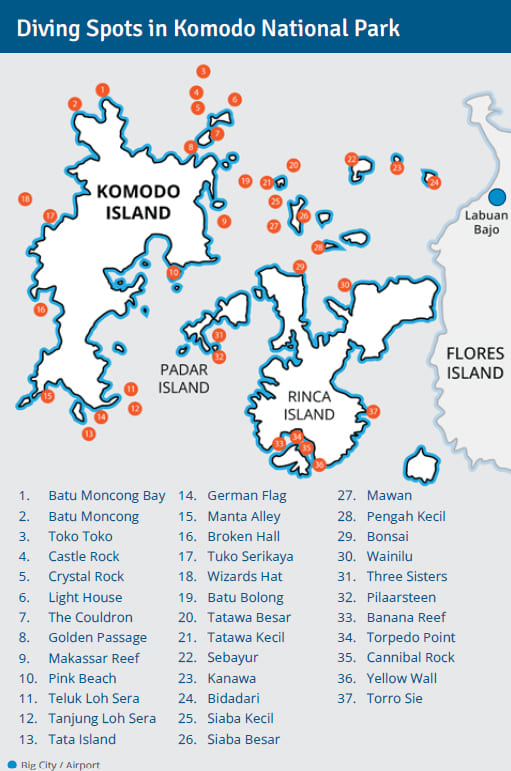 Komodo, famed for its rugged beauty and adventure, is one of Indonesia’s top diving destinations, offering encounters with manta rays, sharks, vibrant reefs, and rich marine life. Komodo National Park—encompassing Komodo Island, Rinca Island, and Padar Island—is home to the iconic Komodo dragon and other unique terrestrial species. A UNESCO World Heritage Site, the park blends natural wonders above and below water. Though remote, Komodo is accessible by liveaboard or via landbased stays in Labuan Bajo, which offers scenic sunsets and growing tourist facilities. The local fishing culture, rooted in the Bajo ethnic group, adds to its charm. Visitors are advised to dress modestly in non-tourist or religious areas.
How To Get There
- Fly to Labuan Bajo Komodo International Airport (LBJ)
- Transfer by car to the harbour (15 minutes)
- LOB and day boats depart for Komodo National Park usually in the morning
Diving Conditions
Komodo diving is renowned for its strong currents and seasonal cold water, but offers sites for all skill levels. Advanced sites include seamounts, ocean pinnacles, and narrow channels that often require negative entries and rapid descents due to vertical currents. Gentler options feature sloping reefs in sheltered bays and coves.
Visibility : 10 - 30 m
Best Time : Apr - Nov
North stays warm; South cools markedly Jul–Sep to 22–26°C.
Dive Site and Marine Life Highlights in Komodo National Park
Komodo boasts a large variety of marine life, including manta rays, sharks, and tuna, alongside a rich assortment of smaller fish. Notable dive sites include Tatawa Kecil, renowned for its diverse fish life, Cannibal Rock, known for its vibrant macro subjects, and The Cauldron, which offers encounters with big fish and dense schools. Batu Bolong teems with marine life, while Pillarsteen offers caves, swim-throughs, and a high level of macro diversity. Snorkelers and freedivers are drawn by the chance to swim with manta rays, especially at the Airstrip. While strong currents make surface support essential for freediving, protected bays provide calm conditions for relaxed snorkeling and freediving. The famous Pink Beach offers vibrant marine life, including turtles, parrotfish, and moray eels.
KOMODO NATIONAL PARK
Komodo, famed for its rugged beauty and adventure, is one of Indonesia’s top diving destinations, offering encounters with manta rays, sharks, vibrant reefs, and rich marine life. Komodo National Park—encompassing Komodo Island, Rinca Island, and Padar Island—is home to the iconic Komodo dragon and other unique terrestrial species. A UNESCO World Heritage Site, the park blends natural wonders above and below water. Though remote, Komodo is accessible by liveaboard or via landbased stays in Labuan Bajo, which offers scenic sunsets and growing tourist facilities. The local fishing culture, rooted in the Bajo ethnic group, adds to its charm. Visitors are advised to dress modestly in non-tourist or religious areas.
How To Get There
- Fly to Labuan Bajo Komodo International Airport (LBJ)
- Transfer by car to the harbour (15 minutes)
- LOB and day boats depart for Komodo National Park usually in the morning
Diving Conditions
Komodo diving is renowned for its strong currents and seasonal cold water, but offers sites for all skill levels. Advanced sites include seamounts, ocean pinnacles, and narrow channels that often require negative entries and rapid descents due to vertical currents. Gentler options feature sloping reefs in sheltered bays and coves.
Visibility : 10 - 30 m
Best Time : Apr - Nov
North stays warm; South cools markedly Jul–Sep to 22–26°C.
Dive Site and Marine Life Highlights in Komodo National Park
Komodo boasts a large variety of marine life, including manta rays, sharks, and tuna, alongside a rich assortment of smaller fish. Notable dive sites include Tatawa Kecil, renowned for its diverse fish life, Cannibal Rock, known for its vibrant macro subjects, and The Cauldron, which offers encounters with big fish and dense schools. Batu Bolong teems with marine life, while Pillarsteen offers caves, swim-throughs, and a high level of macro diversity. Snorkelers and freedivers are drawn by the chance to swim with manta rays, especially at the Airstrip. While strong currents make surface support essential for freediving, protected bays provide calm conditions for relaxed snorkeling and freediving. The famous Pink Beach offers vibrant marine life, including turtles, parrotfish, and moray eels.
NORTH ALOR & KUPANG
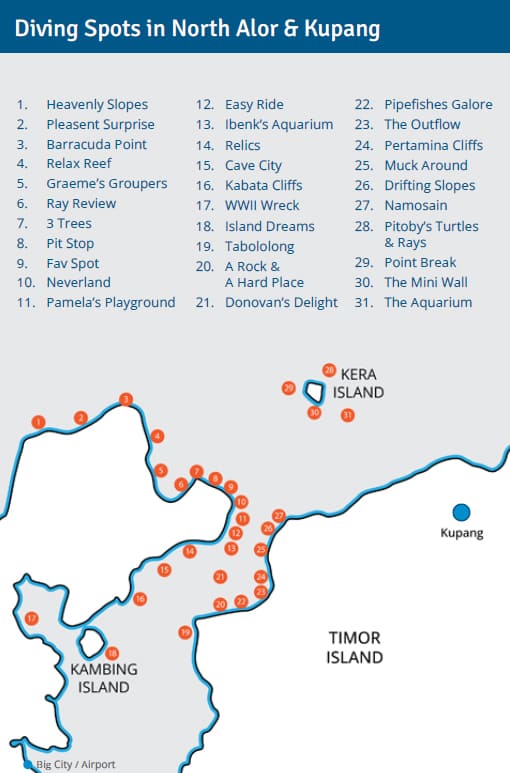 Alor Island, the largest in the archipelago, spans 2,800 square kilometers and is accessible via flights from Kupang on Timor Island. Kalabahi, its main town with around 18,800 residents, offers basic amenities like shops, street vendors, and warungs, but lacks luxury facilities. While some dive resorts exist, most visitors arrive by liveaboard; however, land-based operations are also expanding. Alor’s economy is driven by pearl farming, agriculture, and fishing. Locals speak Alor-Malay, and basic English is understood in tourism areas, but not widely spoken. Kupang, though more developed with malls and hotels, offers only moderate diving compared to Alor’s world-class sites.
How To Get There
- Fly to Kupang El Tari Airport (KOE). To get to Alor take a domestic flight to Alor Mali Airport (ARD)
- Transfers to Tenau Harbour (45 minutes) for boat transfer
Diving Conditions
Alor is known for its strong currents, making it best suited for experienced divers; however, some sites are accessible to all levels with proper timing and planning. Northern dive sites around Alor, Pantar, and nearby islands offer walls, slopes, seamounts, ridges, and pinnacles.
Visibility : 15 - 30 m
Best Time : Apr - Nov
Thermoclines Jul–Sep to 24–26°C.
Dive Site and Marine Life Highlights in North Alor & Kupang
The north of the Alor Archipelago offers world-class coral reefs, stunning walls, vibrant sea mounts, and visibility exceeding 40 meters. It's known for abundant fish life, thrilling currents, and big pelagic sightings, including dolphins and orcas. Notable dive sites include The Fish Bowl, with vibrant marine life and a colorful coral wall, Kal's Dream, featuring sweeping currents and large pelagics, Mike's Delight, a diverse reef with pelagic sightings, Paradise Point, an exhilarating drift dive with reef sharks and eagle rays, and Pantar Wall, a breathtaking site with abundant fish schools. The region also offers exceptional snorkeling and freediving opportunities, featuring rare critters and pristine coral reefs, particularly at Ribbon Eel Reef, Clown Alley, and Feather Star City. Current conditions should be noted for freedivers, with boat support recommended for longer dives.
Kupang offers some of Indonesia’s rare cave diving experiences, with two notable systems: Crystal Cave and Oehani Cave. These highland sinkholes feature limestone tunnels, halocline layers, and air chambers, with visibility reaching up to 50 meters. Oehani Cave extends 500 meters and contains three air chambers, while Crystal Cave has a 100 meter tunnel and a halocline chamber. Both sites are suited for certified cavern divers only, as there's no access to air or the surface within the tunnels until reaching designated chambers.
NORTH ALOR & KUPANG
Alor Island, the largest in the archipelago, spans 2,800 square kilometers and is accessible via flights from Kupang on Timor Island. Kalabahi, its main town with around 18,800 residents, offers basic amenities like shops, street vendors, and warungs, but lacks luxury facilities. While some dive resorts exist, most visitors arrive by liveaboard; however, land-based operations are also expanding. Alor’s economy is driven by pearl farming, agriculture, and fishing. Locals speak Alor-Malay, and basic English is understood in tourism areas, but not widely spoken. Kupang, though more developed with malls and hotels, offers only moderate diving compared to Alor’s world-class sites.
How To Get There
- Fly to Kupang El Tari Airport (KOE). To get to Alor take a domestic flight to Alor Mali Airport (ARD)
- Transfers to Tenau Harbour (45 minutes) for boat transfer
Diving Conditions
Alor is known for its strong currents, making it best suited for experienced divers; however, some sites are accessible to all levels with proper timing and planning. Northern dive sites around Alor, Pantar, and nearby islands offer walls, slopes, seamounts, ridges, and pinnacles.
Visibility : 15 - 30 m
Best Time : Apr - Nov
Thermoclines Jul–Sep to 24–26°C.
Dive Site and Marine Life Highlights in North Alor & Kupang
The north of the Alor Archipelago offers world-class coral reefs, stunning walls, vibrant sea mounts, and visibility exceeding 40 meters. It's known for abundant fish life, thrilling currents, and big pelagic sightings, including dolphins and orcas. Notable dive sites include The Fish Bowl, with vibrant marine life and a colorful coral wall, Kal's Dream, featuring sweeping currents and large pelagics, Mike's Delight, a diverse reef with pelagic sightings, Paradise Point, an exhilarating drift dive with reef sharks and eagle rays, and Pantar Wall, a breathtaking site with abundant fish schools. The region also offers exceptional snorkeling and freediving opportunities, featuring rare critters and pristine coral reefs, particularly at Ribbon Eel Reef, Clown Alley, and Feather Star City. Current conditions should be noted for freedivers, with boat support recommended for longer dives.
Kupang offers some of Indonesia’s rare cave diving experiences, with two notable systems: Crystal Cave and Oehani Cave. These highland sinkholes feature limestone tunnels, halocline layers, and air chambers, with visibility reaching up to 50 meters. Oehani Cave extends 500 meters and contains three air chambers, while Crystal Cave has a 100 meter tunnel and a halocline chamber. Both sites are suited for certified cavern divers only, as there's no access to air or the surface within the tunnels until reaching designated chambers.
SOUTH ALOR & THE SAVU SEA
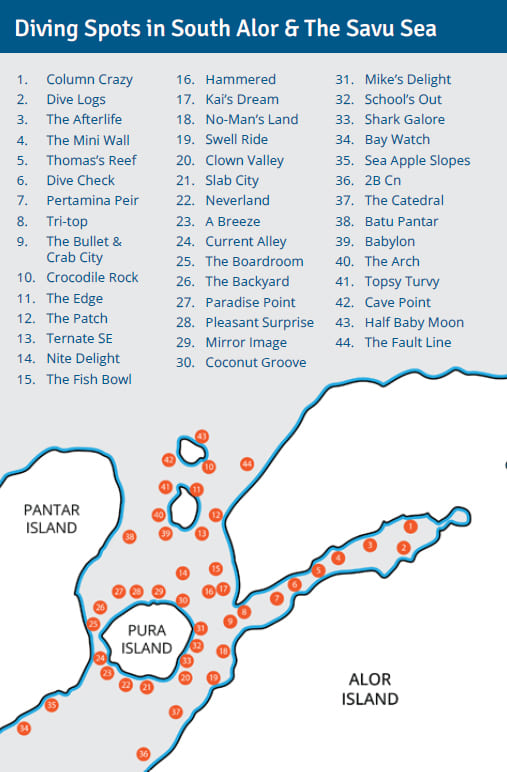 South Alor and Savu offer exceptional diving, featuring pristine reefs, rich marine life, and crystal-clear waters. South Alor boasts vibrant coral gardens, seamounts, and sightings of pelagic species, including tuna, sharks, and barracuda. Savu, renowned for its calm waters and pristine reefs, is perfect for those seeking tranquility and rare marine encounters, including manta rays, whale sharks, and unique macro life. Both destinations provide excellent visibility and a chance to explore vibrant, remote underwater ecosystems.
How To Get There
- Fly to Kupang El Tari Airport (KOE). Take a domestic flight to Alor Mali Airport (ARD)
- Transfers to Tenau Harbour (45 minutes) for boat transfer
- Boat trip from Tenau Harbour to Alor Kalabahi Harbour (13 - 16 hours)
Diving Conditions
South Alor offers exceptional diving for experienced divers, featuring thrilling drift dives, vertical coral walls, and varied underwater terrain. Calmer sites in sheltered bays and sloping reefs are available for less experienced divers, with timing adjusted to avoid strong currents.
Visibility : 10 - 25 m
Best Time : Apr - Nov
Persistent upwelling Jun–Oct to 20–24°C.
Dive Site and Marine Life Highlights in South Alor & The Savu Sea
South Alor boasts a diverse range of dive sites, including seamounts, walls, muck dives, coral gardens, and drop-offs, all teeming with a rich array of marine life. Pelagics such as thresher and hammerhead sharks, oceanic sunfish, dolphins, and orcas are found here, alongside critters like frogfish, rhinopias, bluering octopus, and nudibranchs. The Cathedral is known for its swim-through and abundant life, while Andy’s Bus Stop offers dramatic wall diving with dense fish swarms. Beangabang Bay is a standout for macro lovers, offering pristine muck diving with ghost pipefish, seahorses, and more. South Alor also appeals to snorkelers and freedivers, thanks to its vibrant corals, clear waters, and calm bays. While some areas require boat access, the journey is often rewarded with sightings of dolphins and whales.
SOUTH ALOR & THE SAVU SEA
South Alor and Savu offer exceptional diving, featuring pristine reefs, rich marine life, and crystal-clear waters. South Alor boasts vibrant coral gardens, seamounts, and sightings of pelagic species, including tuna, sharks, and barracuda. Savu, renowned for its calm waters and pristine reefs, is perfect for those seeking tranquility and rare marine encounters, including manta rays, whale sharks, and unique macro life. Both destinations provide excellent visibility and a chance to explore vibrant, remote underwater ecosystems.
How To Get There
- Fly to Kupang El Tari Airport (KOE). Take a domestic flight to Alor Mali Airport (ARD)
- Transfers to Tenau Harbour (45 minutes) for boat transfer
- Boat trip from Tenau Harbour to Alor Kalabahi Harbour (13 - 16 hours)
Diving Conditions
South Alor offers exceptional diving for experienced divers, featuring thrilling drift dives, vertical coral walls, and varied underwater terrain. Calmer sites in sheltered bays and sloping reefs are available for less experienced divers, with timing adjusted to avoid strong currents.
Visibility : 10 - 25 m
Best Time : Apr - Nov
Persistent upwelling Jun–Oct to 20–24°C.
Dive Site and Marine Life Highlights in South Alor & The Savu Sea
South Alor boasts a diverse range of dive sites, including seamounts, walls, muck dives, coral gardens, and drop-offs, all teeming with a rich array of marine life. Pelagics such as thresher and hammerhead sharks, oceanic sunfish, dolphins, and orcas are found here, alongside critters like frogfish, rhinopias, bluering octopus, and nudibranchs. The Cathedral is known for its swim-through and abundant life, while Andy’s Bus Stop offers dramatic wall diving with dense fish swarms. Beangabang Bay is a standout for macro lovers, offering pristine muck diving with ghost pipefish, seahorses, and more. South Alor also appeals to snorkelers and freedivers, thanks to its vibrant corals, clear waters, and calm bays. While some areas require boat access, the journey is often rewarded with sightings of dolphins and whales.