JAVA The Land of Fertile Soils
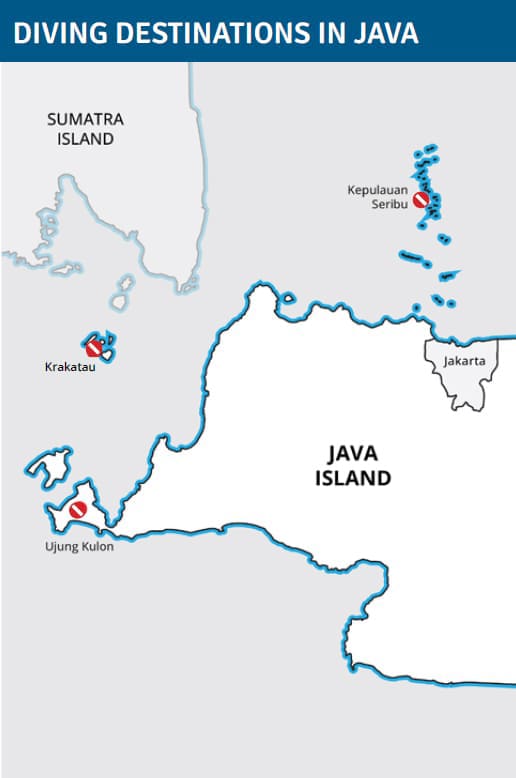 Java, Indonesia’s fifth-largest island, is the world’s most populous, with over 145 million residents. Located between Sumatra and Bali, it features a volcanic landscape of rainforests, fertile highlands, active volcanoes, and coastal cliffs. Java is the heart of Indonesia’s economy, politics, and culture. The island has a tropical climate, with temperatures ranging from 22°C - 29°C and a wet season from October to April. Its population is ethnically diverse, primarily Javanese and Sundanese, and predominantly Muslim. Javanese cuisine is primarily rice-based, mild, and slightly sweet, featuring staples such as tempeh, tofu, and chicken. Jakarta, the capital, sits on Java’s northwest coast. With over 11 million people, it's Southeast Asia’s most populous city. Jakarta is a vibrant blend of modernity and tradition, where skyscrapers tower over slums, and street vendors serve delicious meals for under a dollar. For travelers, the city is both a culture shock and a rewarding adventure.
Diving Overview
Diving in Java may lack the world-class visibility of other Indonesian sites—typically 5–10 meters, with less visibility during the rainy season—but it still offers unique experiences. Kepulauan Seribu near Jakarta provide tranquil dive spots, while Anak Krakatau offers a rare volcanic dive. Ujung Kulon National Park, a UNESCO Word Heritage Site, features rich marine biodiversity and is home to the endangered Javan rhinoceros.
Diving Conditions
Dive sites near Jakarta have limited visibility, which improves farther from shore but is often reduced by rain. Currents are generally mild, but they strengthen around the full moon. Kepulauan Seribu offer gentle drift dives suited for beginners, while Krakatau presents more challenging conditions for experienced divers.
Dive Site and Marine Life Highlights in JAVA
Dive sites near Jakarta host a diverse array of marine life, including sweetlips, batfish, moray eels, stingrays, angelfish, and parrotfish. Larger species—such as reef sharks, hawksbill turtles, tuna, and barracuda—are seen occasionally. Anak Krakatau stands out for its volcanic topography, featuring lava boulders, swim-throughs, and caverns that offer a unique geological dive experience. Wreck dives are available at both Kepulauan Seribu and Krakatau. Ujung Kulon National Park boasts a rich biodiversity, featuring diverse ecosystems such as coral reefs and mangroves. The main draw of these sites is their easy access from Jakarta, ideal for weekend divers.
JAVA The Land of Fertile Soils
Java, Indonesia’s fifth-largest island, is the world’s most populous, with over 145 million residents. Located between Sumatra and Bali, it features a volcanic landscape of rainforests, fertile highlands, active volcanoes, and coastal cliffs. Java is the heart of Indonesia’s economy, politics, and culture. The island has a tropical climate, with temperatures ranging from 22°C - 29°C and a wet season from October to April. Its population is ethnically diverse, primarily Javanese and Sundanese, and predominantly Muslim. Javanese cuisine is primarily rice-based, mild, and slightly sweet, featuring staples such as tempeh, tofu, and chicken. Jakarta, the capital, sits on Java’s northwest coast. With over 11 million people, it's Southeast Asia’s most populous city. Jakarta is a vibrant blend of modernity and tradition, where skyscrapers tower over slums, and street vendors serve delicious meals for under a dollar. For travelers, the city is both a culture shock and a rewarding adventure.
Diving Overview
Diving in Java may lack the world-class visibility of other Indonesian sites—typically 5–10 meters, with less visibility during the rainy season—but it still offers unique experiences. Kepulauan Seribu near Jakarta provide tranquil dive spots, while Anak Krakatau offers a rare volcanic dive. Ujung Kulon National Park, a UNESCO Word Heritage Site, features rich marine biodiversity and is home to the endangered Javan rhinoceros.
Diving Conditions
Dive sites near Jakarta have limited visibility, which improves farther from shore but is often reduced by rain. Currents are generally mild, but they strengthen around the full moon. Kepulauan Seribu offer gentle drift dives suited for beginners, while Krakatau presents more challenging conditions for experienced divers.
Dive Site and Marine Life Highlights in JAVA
Dive sites near Jakarta host a diverse array of marine life, including sweetlips, batfish, moray eels, stingrays, angelfish, and parrotfish. Larger species—such as reef sharks, hawksbill turtles, tuna, and barracuda—are seen occasionally. Anak Krakatau stands out for its volcanic topography, featuring lava boulders, swim-throughs, and caverns that offer a unique geological dive experience. Wreck dives are available at both Kepulauan Seribu and Krakatau. Ujung Kulon National Park boasts a rich biodiversity, featuring diverse ecosystems such as coral reefs and mangroves. The main draw of these sites is their easy access from Jakarta, ideal for weekend divers.
KEPULAUAN SERIBU
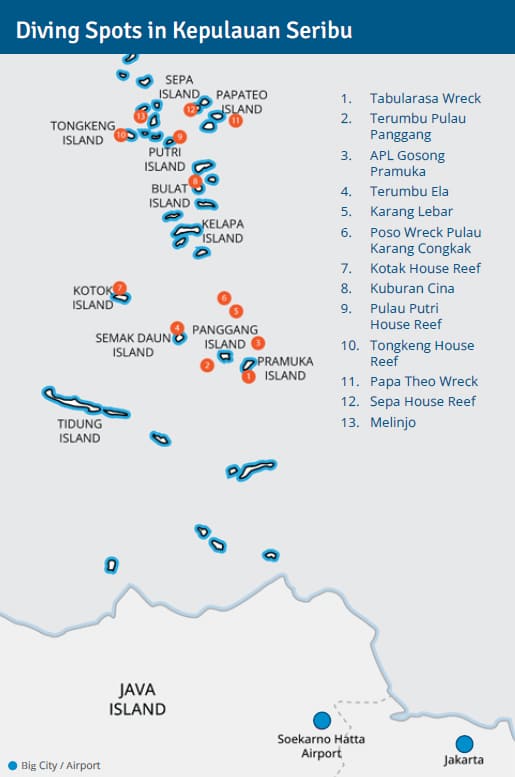 Kepulauan Seribu is a chain of around 342 islands located 45 km north of Jakarta, stretching into the Java Sea. Easily reached from Marina Ancol, it’s a popular weekend dive spot. Sites range from shallow reefs to deeper areas around 18 meters, where coral and marine life thrive. Visibility and biodiversity improve further as you move away from shore. With calm conditions and varied underwater terrain, it’s ideal for divers of all levels.
How To Get There
- Fly to Jakarta Soekarno-Hatta International Airport (CGK) or Jakarta Halim Perdanakusumah International Airport (HLP
- Transfer by car to Marina Ancol or Muara Angke / Kali Adem (1 hour)
- Fast boats depart from Marina Ancol
- Public ferries depart from Muara Angke / Kali Adem harbour
Diving Conditions
Kepulauan Seribu offers calm conditions and sandy bottoms, making it an ideal location for training, suitable for all skill levels. Depths rarely exceed 30 meters. Currents intensify around the full moon, allowing for enjoyable drift dives along longshore reefs. The best diving season is July to September, outside the wet season.
Visibility : 5 - 20 m (Visibility reduced by runoff in rainy season (Nov–Mar); mild currents)
Best Time : Jul - Sep
Dive Site and Marine Life Highlights in Kepulauan Seribu
Kepulauan Seribu offers diverse, though moderate, marine life compared to other Indonesian regions. Common sightings include parrotfish, butterflyfish, angelfish, anemonefish, moray eels, stingrays, and crustaceans, as well as occasional reef sharks and turtles. Wreck dives include the Papa Theo a 32 meter deep cargo ship home to groupers, boxfish, and morays and the Poso near Pulau Karang Congkak, where divers can spot fusiliers, barracuda, shrimp, and nudibranchs. Kotak House Reef is a training site featuring an artificial reef that is home to butterflyfish, gobies, and blue-spotted stingrays. The KM Tabularasa wreck off Pramuka Island hosts schooling fusiliers and a mix of hard and soft corals. At Pulau Bulat, a sloping reef supports healthy coral and attracts turtles, snappers, morays, and butterflyfish.
KEPULAUAN SERIBU
Kepulauan Seribu is a chain of around 342 islands located 45 km north of Jakarta, stretching into the Java Sea. Easily reached from Marina Ancol, it’s a popular weekend dive spot. Sites range from shallow reefs to deeper areas around 18 meters, where coral and marine life thrive. Visibility and biodiversity improve further as you move away from shore. With calm conditions and varied underwater terrain, it’s ideal for divers of all levels.
How To Get There
- Fly to Jakarta Soekarno-Hatta International Airport (CGK) or Jakarta Halim Perdanakusumah International Airport (HLP
- Transfer by car to Marina Ancol or Muara Angke / Kali Adem (1 hour)
- Fast boats depart from Marina Ancol
- Public ferries depart from Muara Angke / Kali Adem harbour
Diving Conditions
Kepulauan Seribu offers calm conditions and sandy bottoms, making it an ideal location for training, suitable for all skill levels. Depths rarely exceed 30 meters. Currents intensify around the full moon, allowing for enjoyable drift dives along longshore reefs. The best diving season is July to September, outside the wet season.
Visibility : 5 - 20 m (Visibility reduced by runoff in rainy season (Nov–Mar); mild currents)
Best Time : Jul - Sep
Dive Site and Marine Life Highlights in Kepulauan Seribu
Kepulauan Seribu offers diverse, though moderate, marine life compared to other Indonesian regions. Common sightings include parrotfish, butterflyfish, angelfish, anemonefish, moray eels, stingrays, and crustaceans, as well as occasional reef sharks and turtles. Wreck dives include the Papa Theo a 32 meter deep cargo ship home to groupers, boxfish, and morays and the Poso near Pulau Karang Congkak, where divers can spot fusiliers, barracuda, shrimp, and nudibranchs. Kotak House Reef is a training site featuring an artificial reef that is home to butterflyfish, gobies, and blue-spotted stingrays. The KM Tabularasa wreck off Pramuka Island hosts schooling fusiliers and a mix of hard and soft corals. At Pulau Bulat, a sloping reef supports healthy coral and attracts turtles, snappers, morays, and butterflyfish.
KRAKATAU/ UJUNG KULON
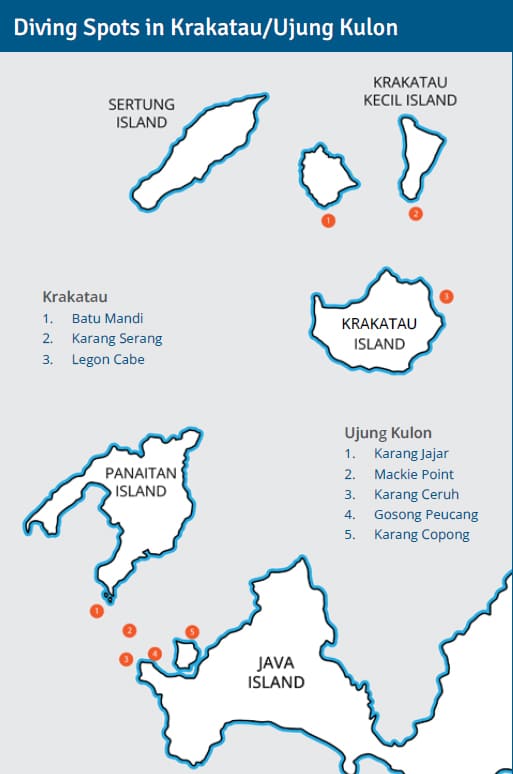 Krakatoa (also known as Krakatau) is a volcanic caldera located in the Sunda Strait, part of an archipelago that includes Lang, Verlaten, and Rakata—the latter being a remnant of the island destroyed in the catastrophic 1883 eruption. Anak Krakatau (“Child of Krakatau”) emerged in 1927 and remains active, including the 2018 eruption that triggered a deadly tsunami. Diving here draws those fascinated by lava rock formations, caverns, and swim-throughs. While fish life is abundant, the coral is less vibrant than in other Indonesian dive spots.
How To Get There
- Fly to Jakarta Soekarno-Hatta International Airport (CGK) or Jakarta Halim Perdanakusumah International Airport (HLP)
- Transfer by car to Carita (3 - 4 hours
- From Carita take a speedboat to Krakatau. To Ujung Kulon National Park take a speedboat from Sumur Village.
Diving Conditions
Diving in Ujung Kulon varies by site, with some areas better suited for experienced divers due to strong currents and remote access. Conditions are generally easier than those at Anak Krakatau. Popular sites feature black lava boulders and volcanic formations.
Visibility : 10 - 25 m
Best Time : Apr - Oct
Volcanic substrate can be surgey, moderate currents especially in channels.
Dive Site and Marine Life Highlights in Krakatau/Ujung Kulon
Karang Serang is characterized by strong currents and thermoclines that attract tuna, barracuda, and large angelfish. At Moray Point divers can spot moray eels tucked into wall crevices, while Sangiang offers a rock canyon surge dive. The Sunda Strait hosts several wrecks, including the USS Houston and HMAS Perth. At Tanjung Layar Lighthouse, visibility can reach 20 meters, with large barracuda among the boulders. Karang Copong offers a tunnel dive that leads to massive caves, and Karang Jajar, located off Panaitan Island, is popular for drift diving, with frequent sightings of turtles and rays.
KRAKATAU/ UJUNG KULON
Krakatoa (also known as Krakatau) is a volcanic caldera located in the Sunda Strait, part of an archipelago that includes Lang, Verlaten, and Rakata—the latter being a remnant of the island destroyed in the catastrophic 1883 eruption. Anak Krakatau (“Child of Krakatau”) emerged in 1927 and remains active, including the 2018 eruption that triggered a deadly tsunami. Diving here draws those fascinated by lava rock formations, caverns, and swim-throughs. While fish life is abundant, the coral is less vibrant than in other Indonesian dive spots.
How To Get There
- Fly to Jakarta Soekarno-Hatta International Airport (CGK) or Jakarta Halim Perdanakusumah International Airport (HLP)
- Transfer by car to Carita (3 - 4 hours
- From Carita take a speedboat to Krakatau. To Ujung Kulon National Park take a speedboat from Sumur Village.
Diving Conditions
Diving in Ujung Kulon varies by site, with some areas better suited for experienced divers due to strong currents and remote access. Conditions are generally easier than those at Anak Krakatau. Popular sites feature black lava boulders and volcanic formations.
Visibility : 10 - 25 m
Best Time : Apr - Oct
Volcanic substrate can be surgey, moderate currents especially in channels.
Dive Site and Marine Life Highlights in Krakatau/Ujung Kulon
Karang Serang is characterized by strong currents and thermoclines that attract tuna, barracuda, and large angelfish. At Moray Point divers can spot moray eels tucked into wall crevices, while Sangiang offers a rock canyon surge dive. The Sunda Strait hosts several wrecks, including the USS Houston and HMAS Perth. At Tanjung Layar Lighthouse, visibility can reach 20 meters, with large barracuda among the boulders. Karang Copong offers a tunnel dive that leads to massive caves, and Karang Jajar, located off Panaitan Island, is popular for drift diving, with frequent sightings of turtles and rays.