About Us
Dive Indonesia™ is a one gate services for your information diving trip, liveaboard, scuba travel, dive cruise, boat charter, speed boat, sailing trip, dive center, dive resort/hotel, dive insurance, diving course, leisure and activities in Indonesia. Full covered service trip, travel diving packages, private cruise / boat / yacht charter or tailor made are arrange to pampers you explore the underwater beauty. We pride ourselves on getting back to you in a timely manner with the information you need and welcome to the underwater beauty of Indonesia.


Eat-Sleep-Dive-Repeat

Introduction to Diving in Indonesia
Dive into the Wonders of Indonesia!
Indonesia, the world’s largest archipelagic nation with over 17,500 islands, lies at the heart of the Coral Triangle—the most biodiverse marine region on the planet. This extraordinary position grants the country a wealth of underwater treasures, offering diving and snorkeling experiences that are both diverse and unmatched globally. From vibrant coral reefs and expansive seagrass beds to encounters with rare marine species and apex predators such as whale sharks, Indonesia presents an exceptional range of dive environments. Each site offers its unique ecological character, ensuring no two experiences are ever the same. Indonesia’s marine ecosystems remain remarkably resilient, showcasing thriving biodiversity despite mounting global environmental pressures. With dive sites suitable for both beginners and experienced divers, the country welcomes all who seek to explore its extraordinary underwater world. Explore the depths of one of the richest marine ecosystems on Earth.
Introduction to Diving in Indonesia
Dive into the Wonders of Indonesia!
Indonesia, the world’s largest archipelagic nation with over 17,500 islands, lies at the heart of the Coral Triangle—the most biodiverse marine region on the planet. This extraordinary position grants the country a wealth of underwater treasures, offering diving and snorkeling experiences that are both diverse and unmatched globally. From vibrant coral reefs and expansive seagrass beds to encounters with rare marine species and apex predators such as whale sharks, Indonesia presents an exceptional range of dive environments. Each site offers its unique ecological character, ensuring no two experiences are ever the same. Indonesia’s marine ecosystems remain remarkably resilient, showcasing thriving biodiversity despite mounting global environmental pressures. With dive sites suitable for both beginners and experienced divers, the country welcomes all who seek to explore its extraordinary underwater world. Explore the depths of one of the richest marine ecosystems on Earth.
Diversity of Diving in the Indonesian Archipelago
Indonesia is renowned for its extraordinary marine biodiversity and wide range of dive experiences, from vibrant reefs and thrilling drifts to caves, deep dives, macro photography sites, and night dives—offering something for every level and interest.
Diversity of Diving in the Indonesian Archipelago
Indonesia is renowned for its extraordinary marine biodiversity and wide range of dive experiences, from vibrant reefs and thrilling drifts to caves, deep dives, macro photography sites, and night dives—offering something for every level and interest.
Coral Reef Diving
Coral reefs form the backbone of diving in Indonesia, with reef dives available in nearly every region—though the quality can vary. To protect these fragile ecosystems, divers should maintain excellent buoyancy, observe passively, and refrain from touching the corals or marine life.
TOP 5 Destinations for Coral Reef Diving:
1. Alor, Savu Sea, Eastern Nusa Tenggara
2. Misool, Raja Ampat, Papua
3. Tomia, Wakatobi, Southeast Sulawesi
4. Birds Head Peninsula, Raja Ampat, Papua
5. Komodo National Park, Eastern Nusa Tenggara
Coral Reef Diving
Coral reefs form the backbone of diving in Indonesia, with reef dives available in nearly every region—though the quality can vary. To protect these fragile ecosystems, divers should maintain excellent buoyancy, observe passively, and refrain from touching the corals or marine life.
TOP 5 Destinations for Coral Reef Diving:
1. Alor, Savu Sea, Eastern Nusa Tenggara
2. Misool, Raja Ampat, Papua
3. Tomia, Wakatobi, Southeast Sulawesi
4. Birds Head Peninsula, Raja Ampat, Papua
5. Komodo National Park, Eastern Nusa Tenggara
Beginner, Novice, and Timid Divers
Every year, thousands of new and novice divers are drawn to Indonesia’s warm, welcoming waters. Ideal beginner dive sites offer depths of 12 - 18 meters, calm and sheltered conditions, clear visibility, and tropical temperatures. Sandy bottoms provide safe areas to practice skills, while minimal boat traffic creates a more relaxed setting. Combined with vibrant marine life, these sites serve as perfect gateways into the underwater world. Instructors aim to build confident, capable divers, and selecting easy, comfortable sites is key to a positive learning experience.
TOP 5 Destinations for Beginners and Novice Divers:
1. Gili Islands, Lombok, Western Nusa Tenggara
2. Tulamben, Bali
3. Bunaken National Park, Northtern Sulawesi
4. Dampier Strait, Raja Ampat, Papua
5. Togean Islands, Central Sulawesi
Beginner, Novice, and Timid Divers
Every year, thousands of new and novice divers are drawn to Indonesia’s warm, welcoming waters. Ideal beginner dive sites offer depths of 12 - 18 meters, calm and sheltered conditions, clear visibility, and tropical temperatures. Sandy bottoms provide safe areas to practice skills, while minimal boat traffic creates a more relaxed setting. Combined with vibrant marine life, these sites serve as perfect gateways into the underwater world. Instructors aim to build confident, capable divers, and selecting easy, comfortable sites is key to a positive learning experience.
TOP 5 Destinations for Beginners and Novice Divers:
1. Gili Islands, Lombok, Western Nusa Tenggara
2. Tulamben, Bali
3. Bunaken National Park, Northtern Sulawesi
4. Dampier Strait, Raja Ampat, Papua
5. Togean Islands, Central Sulawesi
House Reef Diving
A house reef is a dive site located just off the shore of a resort, easily accessible without the need for boat transfers. Perfect for divers of all levels, a quality house reef offers a rich array of marine life and calm, manageable conditions. Following an initial guided orientation, experienced buddy teams can often explore independently, making house reefs a flexible, convenient, and highly rewarding diving option.
TOP 5 of the Most Notable House Reefs:
1. Selayar Dive Resort House Reef, Selayar Island, Southern Sulawesi
2. Wakatobi Resort House Reef, Tomia, Southern Sulawesi
3. Sorido Bay Resort House Reef, Cape Kri, Raja Ampat, Papua
4. Savu South Alor House Reef, Alor, Eastern Nusa Tenggara
5. Misool Eco Resort, Misool, Raja Ampat, Papua
House Reef Diving
A house reef is a dive site located just off the shore of a resort, easily accessible without the need for boat transfers. Perfect for divers of all levels, a quality house reef offers a rich array of marine life and calm, manageable conditions. Following an initial guided orientation, experienced buddy teams can often explore independently, making house reefs a flexible, convenient, and highly rewarding diving option.
TOP 5 of the Most Notable House Reefs:
1. Selayar Dive Resort House Reef, Selayar Island, Southern Sulawesi
2. Wakatobi Resort House Reef, Tomia, Southern Sulawesi
3. Sorido Bay Resort House Reef, Cape Kri, Raja Ampat, Papua
4. Savu South Alor House Reef, Alor, Eastern Nusa Tenggara
5. Misool Eco Resort, Misool, Raja Ampat, Papua
Drift Diving
Drift diving is accessible to all certified divers, though beginners should start with gentle currents. For stronger conditions, additional training—such as the Advanced Open Water or Drift Diver Specialty—is highly recommended. Once mastered, drift diving lets you ride the current effortlessly, enjoy longer dives, cover more reef, and reach sites that were once outside your comfort zone. It’s all about learning to go with the flow.
TOP 5 Destinations for Drift Diving:
1. Komodo National Park, Eastern Nusa Tenggara
2. The Passage (Kabui Passage), Raja Ampat, Papua
3. Pulau Seulako, Pulau Weh, Sumatra
4. Sekolah Dasar Nusa Penida, Bali
5. Cathedral, South Alor, Eastern Nusa Tenggara
Drift Diving
Drift diving is accessible to all certified divers, though beginners should start with gentle currents. For stronger conditions, additional training—such as the Advanced Open Water or Drift Diver Specialty—is highly recommended. Once mastered, drift diving lets you ride the current effortlessly, enjoy longer dives, cover more reef, and reach sites that were once outside your comfort zone. It’s all about learning to go with the flow.
TOP 5 Destinations for Drift Diving:
1. Komodo National Park, Eastern Nusa Tenggara
2. The Passage (Kabui Passage), Raja Ampat, Papua
3. Pulau Seulako, Pulau Weh, Sumatra
4. Sekolah Dasar Nusa Penida, Bali
5. Cathedral, South Alor, Eastern Nusa Tenggara
Deep Diving
Divers should always respect the depth limits of their certification—18 meters (60 feet) for Open Water and 30 meters (100 feet) for Advanced Open Water. Depths beyond 30 meters are reserved for those with deep or technical diving certifications. Deep diving involves additional risks, including pressure effects and decompression considerations, so proper training is essential. In Indonesia, venturing deeper can improve your chances of encountering rare species like mola-mola, hammerhead sharks, and marble rays—though sightings are never guaranteed.
TOP 5 Destinations for Deep Diving:
1. Selayar Island’s East Coast, Southern Sulawesi
2. Bunaken National Park, Northern Sulawesi
3. Tomia, Wakatobi, Southern Sulawesi
4. Pulau Alor, Savu Sea, Eastern Nusa Tenggara
5. Belongas Bay, Lombok, Western Nusa Tenggara
Deep Diving
Divers should always respect the depth limits of their certification—18 meters (60 feet) for Open Water and 30 meters (100 feet) for Advanced Open Water. Depths beyond 30 meters are reserved for those with deep or technical diving certifications. Deep diving involves additional risks, including pressure effects and decompression considerations, so proper training is essential. In Indonesia, venturing deeper can improve your chances of encountering rare species like mola-mola, hammerhead sharks, and marble rays—though sightings are never guaranteed.
TOP 5 Destinations for Deep Diving:
1. Selayar Island’s East Coast, Southern Sulawesi
2. Bunaken National Park, Northern Sulawesi
3. Tomia, Wakatobi, Southern Sulawesi
4. Pulau Alor, Savu Sea, Eastern Nusa Tenggara
5. Belongas Bay, Lombok, Western Nusa Tenggara
Night Diving
Wreck diving offers a uniquely captivating experience, blending history with underwater adventure. Non-penetration dives are suitable for all certified divers, but additional training significantly enhances both safety and enjoyment. Advanced and specialty courses cover key skills such as wreck navigation, hazard awareness, safe penetration techniques, and emergency procedures.
TOP 5 Wreck Sites for Wreck Divers:
1. Duke of Sparta, Ambon Bay, Maluku
2. Sophie Rickmers, Pulau Weh, Sumatra
3. USAT Liberty Shipwreck, Tulamben, Bali
4. Boga Wreck, Tulamben, Bali
5. Mawali Wreck, Lembeh, Northern Sulawesi
Night Diving
Wreck diving offers a uniquely captivating experience, blending history with underwater adventure. Non-penetration dives are suitable for all certified divers, but additional training significantly enhances both safety and enjoyment. Advanced and specialty courses cover key skills such as wreck navigation, hazard awareness, safe penetration techniques, and emergency procedures.
TOP 5 Wreck Sites for Wreck Divers:
1. Duke of Sparta, Ambon Bay, Maluku
2. Sophie Rickmers, Pulau Weh, Sumatra
3. USAT Liberty Shipwreck, Tulamben, Bali
4. Boga Wreck, Tulamben, Bali
5. Mawali Wreck, Lembeh, Northern Sulawesi
Wreck Diving
As the sun dips below the horizon, the underwater world transforms. While some marine creatures settle in for the night, others emerge from their hiding places. Indonesia’s waters come alive after dark with fascinating nocturnal species—think tiny octopuses, hunting moray eels, and even elusive walking sharks. Many of the best night dives take place at muck sites, where the seafloor teems with nocturnal activity and stealthy predators on the prowl.
TOP 5 Destinations for Night Diving:
1. Lembeh Strait, Northern Sulawesi
2. Ambon Bay, Maluku
3. Misool, Raja Ampat, Papua
4. Tomia, Wakatobi, Southern Sulawesi
5. USAT Liberty Wreck, Tulamben, Bali
Wreck Diving
As the sun dips below the horizon, the underwater world transforms. While some marine creatures settle in for the night, others emerge from their hiding places. Indonesia’s waters come alive after dark with fascinating nocturnal species—think tiny octopuses, hunting moray eels, and even elusive walking sharks. Many of the best night dives take place at muck sites, where the seafloor teems with nocturnal activity and stealthy predators on the prowl.
TOP 5 Destinations for Night Diving:
1. Lembeh Strait, Northern Sulawesi
2. Ambon Bay, Maluku
3. Misool, Raja Ampat, Papua
4. Tomia, Wakatobi, Southern Sulawesi
5. USAT Liberty Wreck, Tulamben, Bali
Blackwater Diving
Blackwater diving is a one-of-a-kind night dive conducted over deep, open ocean—far from the reefs. Powerful lights are suspended from a drifting boat to attract plankton, which in turn draws in rare and alien-like juvenile creatures carried by the currents. Divers drift alongside the boat, staying close to the lights to witness this vertical slice of the ocean’s food chain. This specialized diving requires excellent buoyancy control and strong night diving skills. While still relatively new in Indonesia, a growing number of operators now offer this extraordinary experience.
TOP 5 Destinations for Blackwater Diving:
1. Lembeh Strait, Northern Sulawesi
2. Tulamben, Bali
3. Manado Bay, Northern Sulawesi
4. Kri Island, Raja Ampat, Papua
5. Ambon Bay, Maluku
Blackwater Diving
Blackwater diving is a one-of-a-kind night dive conducted over deep, open ocean—far from the reefs. Powerful lights are suspended from a drifting boat to attract plankton, which in turn draws in rare and alien-like juvenile creatures carried by the currents. Divers drift alongside the boat, staying close to the lights to witness this vertical slice of the ocean’s food chain. This specialized diving requires excellent buoyancy control and strong night diving skills. While still relatively new in Indonesia, a growing number of operators now offer this extraordinary experience.
TOP 5 Destinations for Blackwater Diving:
1. Lembeh Strait, Northern Sulawesi
2. Tulamben, Bali
3. Manado Bay, Northern Sulawesi
4. Kri Island, Raja Ampat, Papua
5. Ambon Bay, Maluku
Wall Diving
Wall diving depends on the site’s topography and is only found in select regions of Indonesia. These dives usually begin on a shallow reef before descending along a dramatic vertical coral wall that plunges into the depths. Good buoyancy control is essential, as there’s often no visible bottom. Divers stay neutrally buoyant, drifting or swimming alongside the wall while observing its rich marine life - always remembering to glance out into the blue for unexpected pelagic encounters.
TOP 5 Destinations for Wall Diving:
1. Bonetapalang, Selayar Island, Southern Sulawesi
2. Tomia, Wakatobi, Southern Sulawesi
3. Bunaken National Park, Northern Sulawesi
4. Alor & Savu Sea, Eastern Nusa Tenggara
5. Menjangan Island, Pemuteran, Bali
Wall Diving
Wall diving depends on the site’s topography and is only found in select regions of Indonesia. These dives usually begin on a shallow reef before descending along a dramatic vertical coral wall that plunges into the depths. Good buoyancy control is essential, as there’s often no visible bottom. Divers stay neutrally buoyant, drifting or swimming alongside the wall while observing its rich marine life - always remembering to glance out into the blue for unexpected pelagic encounters.
TOP 5 Destinations for Wall Diving:
1. Bonetapalang, Selayar Island, Southern Sulawesi
2. Tomia, Wakatobi, Southern Sulawesi
3. Bunaken National Park, Northern Sulawesi
4. Alor & Savu Sea, Eastern Nusa Tenggara
5. Menjangan Island, Pemuteran, Bali
Muck Diving
Muck diving is all about the thrill of discovering rare and unusual critters in sandy, low-coral environments—often over black volcanic sand. These creatures are masters of camouflage, making the search part of the excitement, especially on night dives. Highly popular among macro photographers, muck diving draws divers of all levels to Indonesia’s world-renowned sites, offering a chance to spot some of the ocean’s most elusive and fascinating species.
TOP 5 Destinations for Muck Diving:
1. Lembeh Strait, Northern Sulawesi
2. Ambon Bay, Maluku
3. Tulamben, Bali
4. Biak & Cenderawasih Bay, Papua
5. Manado Bay, Northern Sulawesi
Muck Diving
Muck diving is all about the thrill of discovering rare and unusual critters in sandy, low-coral environments—often over black volcanic sand. These creatures are masters of camouflage, making the search part of the excitement, especially on night dives. Highly popular among macro photographers, muck diving draws divers of all levels to Indonesia’s world-renowned sites, offering a chance to spot some of the ocean’s most elusive and fascinating species.
TOP 5 Destinations for Muck Diving:
1. Lembeh Strait, Northern Sulawesi
2. Ambon Bay, Maluku
3. Tulamben, Bali
4. Biak & Cenderawasih Bay, Papua
5. Manado Bay, Northern Sulawesi
Shore Diving
While many dive sites in Indonesia offer shore access, only a few stand out for their easy entry and rich marine life. Shore diving isn’t always possible—cliffside coastlines or rough sea conditions, like strong waves, can make entry unsafe. Divers typically wade in fully geared (minus fins), swim out, and then descend; exits follow the same process in reverse. Some of the best shore dives are found on house reefs—vibrant sites located just off resort beaches. These allow guests to dive at their convenience, without relying on boat schedules, making them ideal for flexibility and frequent underwater exploration.
TOP 5 Destinations for Shore Diving:
1. Tomia, Wakatobi, Southern Sulawesi
2. Lembeh Strait, Northern Sulawesi
3. Tulamben, Bali
4. Gili Islands, Western Nusa Tenggara
5. Manado Bay, Northern Sulawesi
Shore Diving
While many dive sites in Indonesia offer shore access, only a few stand out for their easy entry and rich marine life. Shore diving isn’t always possible—cliffside coastlines or rough sea conditions, like strong waves, can make entry unsafe. Divers typically wade in fully geared (minus fins), swim out, and then descend; exits follow the same process in reverse. Some of the best shore dives are found on house reefs—vibrant sites located just off resort beaches. These allow guests to dive at their convenience, without relying on boat schedules, making them ideal for flexibility and frequent underwater exploration.
TOP 5 Destinations for Shore Diving:
1. Tomia, Wakatobi, Southern Sulawesi
2. Lembeh Strait, Northern Sulawesi
3. Tulamben, Bali
4. Gili Islands, Western Nusa Tenggara
5. Manado Bay, Northern Sulawesi
Cave Diving
Cave diving is an advanced form of scuba that involves exploring underwater spaces with overhead barriers and no direct access to the surface or natural light. It requires specialized training, strict safety protocols, and a disciplined mindset. Due to its risks, cave diving is only suitable for certified professionals who understand their limits and the capabilities of their equipment. Indonesia’s volcanic and geological diversity offers a diverse range of cave types, including sinkholes, springs, gypsum caves, and sea caves. While not all are diveable, a few select sites provide truly exceptional cave diving experiences.
TOP 5 Destinations for Cave Diving:
1. Oehani Cave, Kupang, Eastern Nusa Tenggara
2. Muna island, Buton, Southern Sulawesi
3. Tomia, Wakatobi, Southern Sulawesi
4. Baubau, Buton, Southern Sulawesi
5. Kristal Cave, Kupang, Eastern Nusa Tenggara
Cave Diving
Cave diving is an advanced form of scuba that involves exploring underwater spaces with overhead barriers and no direct access to the surface or natural light. It requires specialized training, strict safety protocols, and a disciplined mindset. Due to its risks, cave diving is only suitable for certified professionals who understand their limits and the capabilities of their equipment. Indonesia’s volcanic and geological diversity offers a diverse range of cave types, including sinkholes, springs, gypsum caves, and sea caves. While not all are diveable, a few select sites provide truly exceptional cave diving experiences.
TOP 5 Destinations for Cave Diving:
1. Oehani Cave, Kupang, Eastern Nusa Tenggara
2. Muna island, Buton, Southern Sulawesi
3. Tomia, Wakatobi, Southern Sulawesi
4. Baubau, Buton, Southern Sulawesi
5. Kristal Cave, Kupang, Eastern Nusa Tenggara
Technical Diving
Technical diving extends beyond recreational limits—typically deeper than 40 meters—and involves decompression stops and access to more challenging environments, such as caves and wrecks. It requires specialized equipment such as rebreathers, sidemount systems, multiple tanks, and advanced thermal protection for longer, colder dives. Tech divers must undergo rigorous training, with a solid understanding of gas mixtures, decompression procedures, and risk management. This level of diving is only for those with the proper certifications and experience. Indonesia is a rising tech diving haven, offering deep-sea biodiversity and challenging sites. A region’s success as a technical diving destination depends on two key factors: suitable dive conditions (depth, topography, accessibility) and proper support infrastructure (gear, gases, boats, trained crew, and instructors). Where both exist, tech diving thrives—where they don't, potential remains untapped.
TOP 5 Destinations for Technical Diving:
1. Gili Trawangan, Western Nusa Tenggara
2. Bunaken National Park, Northern Sulawesi
3. Nusa Penida, Bali
4. Amed, Tulamben & Padangbai, Bali
5. Komodo National Park, Eastern Nusa Tenggara
Technical Diving
Technical diving extends beyond recreational limits—typically deeper than 40 meters—and involves decompression stops and access to more challenging environments, such as caves and wrecks. It requires specialized equipment such as rebreathers, sidemount systems, multiple tanks, and advanced thermal protection for longer, colder dives. Tech divers must undergo rigorous training, with a solid understanding of gas mixtures, decompression procedures, and risk management. This level of diving is only for those with the proper certifications and experience. Indonesia is a rising tech diving haven, offering deep-sea biodiversity and challenging sites. A region’s success as a technical diving destination depends on two key factors: suitable dive conditions (depth, topography, accessibility) and proper support infrastructure (gear, gases, boats, trained crew, and instructors). Where both exist, tech diving thrives—where they don't, potential remains untapped.
TOP 5 Destinations for Technical Diving:
1. Gili Trawangan, Western Nusa Tenggara
2. Bunaken National Park, Northern Sulawesi
3. Nusa Penida, Bali
4. Amed, Tulamben & Padangbai, Bali
5. Komodo National Park, Eastern Nusa Tenggara
Liveaboard Diving
Liveaboards are the heart of Indonesia's dive tourism, offering access to remote, world-class sites like Raja Ampat, Komodo, and the Banda Sea—places often out of reach for day boats.
TOP 5 Destinations for Liveaboard Diving:
1. Banda Sea (Forgotten Islands/ Spice Islands), Maluku
2. Raja Ampat (Misool/Dampier Strait), Papua
3. Komodo National Park, Eastern Nusa Tenggara
4. Alor Archipelago & Savu Sea, Eastern Nusa Tenggara
5. Biak & Cenderawasih Bay, Papua
Liveaboard Diving
Liveaboards are the heart of Indonesia's dive tourism, offering access to remote, world-class sites like Raja Ampat, Komodo, and the Banda Sea—places often out of reach for day boats.
TOP 5 Destinations for Liveaboard Diving:
1. Banda Sea (Forgotten Islands/ Spice Islands), Maluku
2. Raja Ampat (Misool/Dampier Strait), Papua
3. Komodo National Park, Eastern Nusa Tenggara
4. Alor Archipelago & Savu Sea, Eastern Nusa Tenggara
5. Biak & Cenderawasih Bay, Papua
Indonesia’s Living Reefs Located in the Heart of the Coral Triangle
Indonesia’s Living Reefs Located in the Heart of the Coral Triangle
Indonesia’s Coral Reefs
Indonesia offers a stunning variety of coral reefs, including fringing reefs, barrier reefs, and atolls. Dive sites range from shallow lagoons with calm waters to deep-sea pinnacles with strong currents. Indonesian reefs are home to over 500 coral species, 10,000 invertebrates and sea plants, and more than 3,000 fish species. They host 6 of the world’s seven turtle species and are vital migration routes for over 30 marine mammal species, including a third of all whale and dolphin species. In short, Indonesia's reefs support the planet’s most diverse and abundant marine life.
Indonesia’s Coral Reefs
Indonesia offers a stunning variety of coral reefs, including fringing reefs, barrier reefs, and atolls. Dive sites range from shallow lagoons with calm waters to deep-sea pinnacles with strong currents. Indonesian reefs are home to over 500 coral species, 10,000 invertebrates and sea plants, and more than 3,000 fish species. They host 6 of the world’s seven turtle species and are vital migration routes for over 30 marine mammal species, including a third of all whale and dolphin species. In short, Indonesia's reefs support the planet’s most diverse and abundant marine life.
Fringing Reefs
Fringing reefs in Indonesia are shallow coral reefs that grow along the edges of islands or landmasses. These reefs typically feature a flat area at depths of 1 - 10 meters, dropping into sloping or vertical walls. While they host mainly robust branching corals, wave action often causes coral damage and rubble, which is a natural occurrence. Fringing reefs are rich in marine life, attracting pelagic species such as sharks, rays, and molas due to the nutrient-rich currents that flow through them. They are widely distributed across Indonesia and can be accessed by boat or shore.
Fringing Reefs
Fringing reefs in Indonesia are shallow coral reefs that grow along the edges of islands or landmasses. These reefs typically feature a flat area at depths of 1 - 10 meters, dropping into sloping or vertical walls. While they host mainly robust branching corals, wave action often causes coral damage and rubble, which is a natural occurrence. Fringing reefs are rich in marine life, attracting pelagic species such as sharks, rays, and molas due to the nutrient-rich currents that flow through them. They are widely distributed across Indonesia and can be accessed by boat or shore.
Barrier Reefs
A barrier reef is a fringing reef where the back reef forms a large lagoon. The Great Barrier Reef in Australia is the most famous example, stretching 2,000 kilometers and featuring lagoons that are up to 100 kilometers wide. Barrier reefs often surround islands in a ripple-like formation, with the lagoon harboring smaller patch reefs. Charles Darwin theorized that barrier reefs start as fringing reefs that grow outward, leaving a lagoon, and if the island subsides, an atoll forms.
Barrier Reefs
A barrier reef is a fringing reef where the back reef forms a large lagoon. The Great Barrier Reef in Australia is the most famous example, stretching 2,000 kilometers and featuring lagoons that are up to 100 kilometers wide. Barrier reefs often surround islands in a ripple-like formation, with the lagoon harboring smaller patch reefs. Charles Darwin theorized that barrier reefs start as fringing reefs that grow outward, leaving a lagoon, and if the island subsides, an atoll forms.
Atolls
Atolls are stunning, circular coral formations with central lagoons that rise from deep waters. Indonesia’s largest atoll, Taka Bonerate in Southern Sulawesi, is the third largest in the world, spanning 72 by 36 kilometers and containing over 20 islands. Atoll lagoons are nutrient-rich due to deep ocean water filtering through the coral walls, making them highly concentrated and unaffected by land-based pollutants. This allows atoll lagoons to support a diverse array of marine life. While Darwin's theory suggests that atolls form from fringing reefs growing outward, recent geological evidence supports an alternative theory involving the erosion of limestone islands and rising sea levels, leaving only a coral rim behind.
Atolls
Atolls are stunning, circular coral formations with central lagoons that rise from deep waters. Indonesia’s largest atoll, Taka Bonerate in Southern Sulawesi, is the third largest in the world, spanning 72 by 36 kilometers and containing over 20 islands. Atoll lagoons are nutrient-rich due to deep ocean water filtering through the coral walls, making them highly concentrated and unaffected by land-based pollutants. This allows atoll lagoons to support a diverse array of marine life. While Darwin's theory suggests that atolls form from fringing reefs growing outward, recent geological evidence supports an alternative theory involving the erosion of limestone islands and rising sea levels, leaving only a coral rim behind.
Coral Reef Marine Life Conservation and Marine Protected Areas
Coral reefs worldwide, including those in Indonesia, are under increasing pressure from various threats. Overfishing, destructive
fishing practices such as cyanide and dynamite fishing, and irresponsible tourism are significant concerns. Anchors also contribute to reef damage. While Indonesia boasts many pristine reefs, these global issues affect parts of the archipelago. To support conservation, divers should choose operators with strong sustainability policies. The Indonesian government has made significant strides in coral reef conservation, establishing numerous national parks and marine protected areas (MPAs) across the country. Most MPAs are no-take zones, prohibiting fishing, turtle egg harvesting, anchoring, and shell collecting. Some MPAs have designated zones for different activities. While these efforts are positive, enforcement remains a challenge. Visitors can help by diving, snorkeling, or freediving in MPAs, where fees from entry tags support conservation projects. Always inquire about purchasing a marine park tag when diving in these areas. Indonesia has established 411 Marine Protected Areas (MPAs) across the archipelago as of 2023, covering around 9% of its territorial waters (over 28 million hectares). Notable MPAs include:
• Komodo National Park (Eastern Nusa Tenggara)
• Bunaken National Park (Northern Sulawesi)
• Raja Ampat MPAs, including Fam Islands, Kofiau, Boo Islands,
Misool, Southeast Misool, and Dampier Strait (Papua)
• Nusa Penida MPA (Bali)
• Taka Bonerate National Park (Southern Sulawesi)
• Karimunjawa MPA (Java)
• Togean Island National Park (Central Sulawesi)
• Kepulauan Seribu National Park (Java)
• Wakatobi National Park (Southern Sulawesi)
Alongside these parks, numerous independent conservation projects, such as turtle hatcheries, manta ray identification databases, artificial reefs, and coral monitoring, are underway throughout Indonesia. Many of these initiatives welcome support and offer educational opportunities. Check with dive operators for conservation projects in your visit area.
Coral Reef Marine Life Conservation and Marine Protected Areas
Coral reefs worldwide, including those in Indonesia, are under increasing pressure from various threats. Overfishing, destructive
fishing practices such as cyanide and dynamite fishing, and irresponsible tourism are significant concerns. Anchors also contribute to reef damage. While Indonesia boasts many pristine reefs, these global issues affect parts of the archipelago. To support conservation, divers should choose operators with strong sustainability policies. The Indonesian government has made significant strides in coral reef conservation, establishing numerous national parks and marine protected areas (MPAs) across the country. Most MPAs are no-take zones, prohibiting fishing, turtle egg harvesting, anchoring, and shell collecting. Some MPAs have designated zones for different activities. While these efforts are positive, enforcement remains a challenge. Visitors can help by diving, snorkeling, or freediving in MPAs, where fees from entry tags support conservation projects. Always inquire about purchasing a marine park tag when diving in these areas. Indonesia has established 411 Marine Protected Areas (MPAs) across the archipelago as of 2023, covering around 9% of its territorial waters (over 28 million hectares). Notable MPAs include:
• Komodo National Park (Eastern Nusa Tenggara)
• Bunaken National Park (Northern Sulawesi)
• Raja Ampat MPAs, including Fam Islands, Kofiau, Boo Islands,
Misool, Southeast Misool, and Dampier Strait (Papua)
• Nusa Penida MPA (Bali)
• Taka Bonerate National Park (Southern Sulawesi)
• Karimunjawa MPA (Java)
• Togean Island National Park (Central Sulawesi)
• Kepulauan Seribu National Park (Java)
• Wakatobi National Park (Southern Sulawesi)
Alongside these parks, numerous independent conservation projects, such as turtle hatcheries, manta ray identification databases, artificial reefs, and coral monitoring, are underway throughout Indonesia. Many of these initiatives welcome support and offer educational opportunities. Check with dive operators for conservation projects in your visit area.
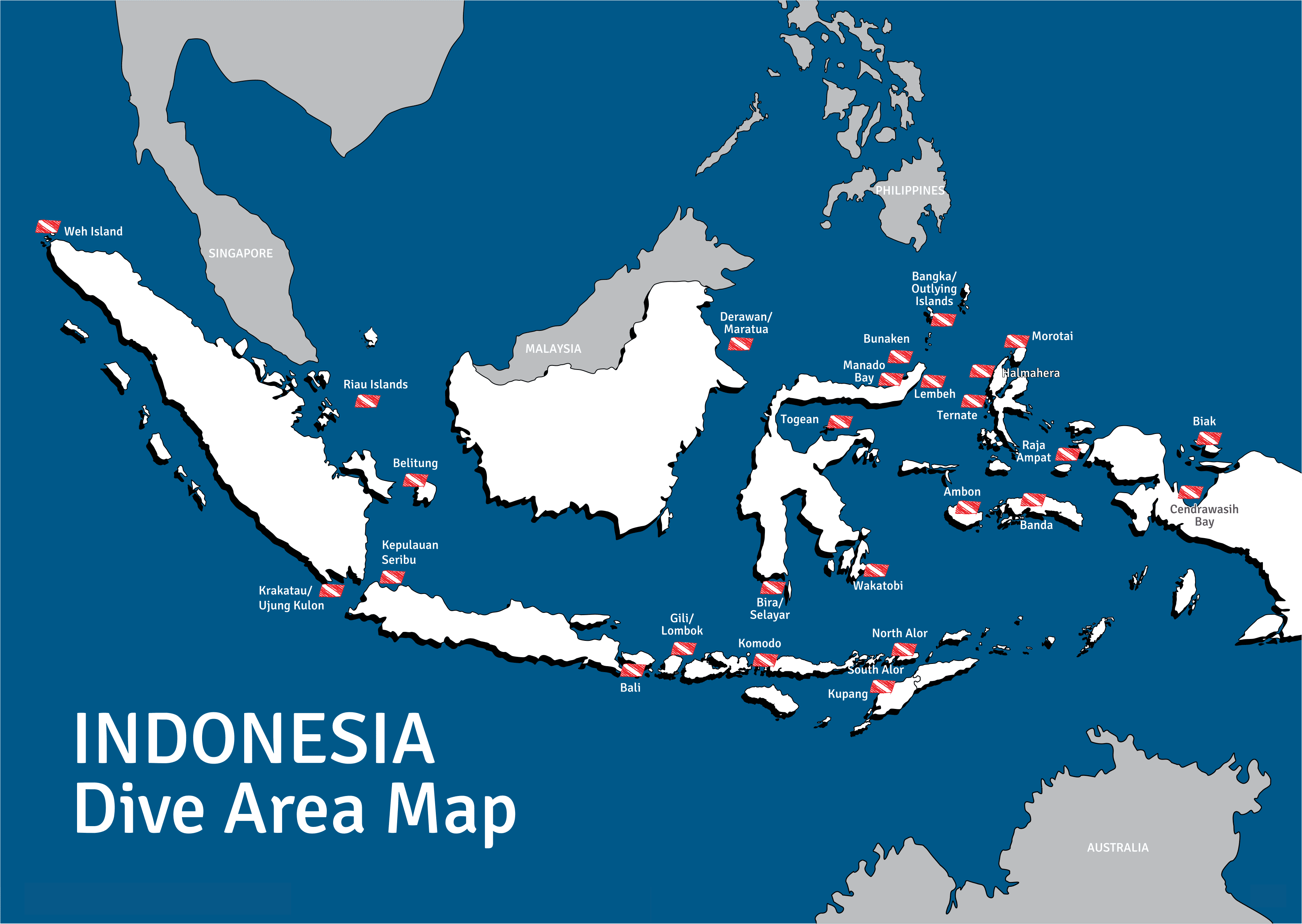
SUMATRA The Natural Beauty and Exceptional Wildlife
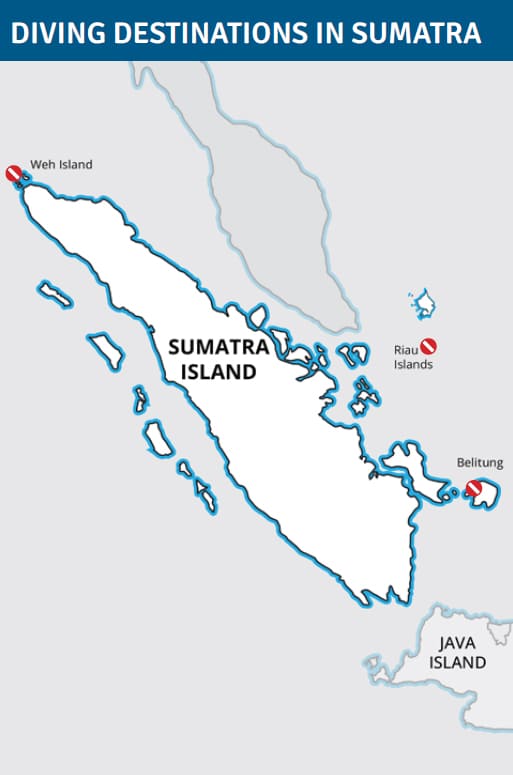 Sumatra, Indonesia’s westernmost and largest island, spans over 473,000 square kilometers and ranks as the sixth-largest island in the world. Known for its dramatic landscapes, the island features active volcanoes, crater lakes, dense jungles, and some of the world’s most pristine beaches. Its natural beauty is matched by rich biodiversity, home to critically endangered species such as orangutans, tigers, rhinos, and elephants. Sumatra is also a top destination for world-class surfing and eco-adventures. Culturally, Sumatra is remarkably diverse. From the devout Muslim communities of Aceh to the Batak Christians around Lake Toba, their people are deeply rooted in tradition and united by a strong connection to the land. Agriculture, including coffee, tea, palm oil, and spices, remains a central component of local livelihoods. Despite the devastation of the 2004 tsunami, particularly in Aceh and Pulau Weh, the region has made a remarkable recovery, standing today as a testament to the resilience and spirit of its people.
Diving Overview
From tranquil bays with shallow coral gardens to adrenaline-filled drift dives over vast reefs, Sumatra offers a diverse range of underwater experiences for divers of all skill levels. Whether you're drawn to pelagic encounters, macro photography, or marine biodiversity, the region has something for everyone. For marine megafauna, Pulau Weh in Banda Aceh is a top choice, home to manta rays, whale sharks, turtles, napoleon wrasse, barracuda, and reef sharks. Macro enthusiasts will find a haven in Belitung, renowned for its diverse array of nudibranchs and cryptic species. Belitung offers optimal conditions for underwater photographers, featuring gentle currents, exceptional visibility— particularly from May to September— and vibrant reefs. For those in search of a hidden gem, the Anambas Islands in the Riau Archipelago offer pristine reefs, crystal-clear waters, and thriving marine life. Divers can explore untouched coral gardens, encounter large pelagic species, and discover an abundance of macro life in this secluded paradise.
Diving Conditions
Sumatra offers thrilling dive experiences across Weh Island, Belitung, and Anambas Islands. Weh Island is known for its adrenaline-pumping drift dives and strong currents, especially around the full moon, providing great sightings of schooling fish and pelagics. Belitung boasts diverse dive sites, including pinnacles, granite formations, and vibrant coral gardens, with drift dives for experienced divers. Anambas, with its pristine reefs and rich marine life, offers crystal-clear waters, stunning coral gardens, and exciting drift dives, making it a top destination for adventurous divers.
Dive Site and Marine Life Highlights in SUMATRA
Sumatra is a marine biodiversity hotspot, home to a wide range of species including reef fish, molluscs, crustaceans, and cephalopods. At Weh Island, divers can encounter large pelagic species, including reef sharks, barracuda, Napoleon wrasse, manta rays, and whale sharks, alongside excellent macro life. The island’s varying currents offer thrilling dives but require caution at depth, where schooling fish and big species are often spotted. Freedivers will also appreciate the rich marine life and excellent visibility. Belitung is renowned for its vibrant coral ecosystems, tranquil waters, and diverse marine life, including nudibranchs, reef fish, sea turtles, and rare macroalgae species. Its gentle conditions make it ideal for underwater photography, while deeper drop-offs are wellsuited for freediving, especially with the support of a boat. The Anambas Islands offer crystal-clear waters, pristine reefs, and diverse dive sites, ranging from colourful coral gardens to drift dives. Divers can expect encounters with pelagic species such as reef sharks, as well as a thriving macro scene, making it a true hidden gem for underwater exploration.
SUMATRA The Natural Beauty and Exceptional Wildlife
Sumatra, Indonesia’s westernmost and largest island, spans over 473,000 square kilometers and ranks as the sixth-largest island in the world. Known for its dramatic landscapes, the island features active volcanoes, crater lakes, dense jungles, and some of the world’s most pristine beaches. Its natural beauty is matched by rich biodiversity, home to critically endangered species such as orangutans, tigers, rhinos, and elephants. Sumatra is also a top destination for world-class surfing and eco-adventures. Culturally, Sumatra is remarkably diverse. From the devout Muslim communities of Aceh to the Batak Christians around Lake Toba, their people are deeply rooted in tradition and united by a strong connection to the land. Agriculture, including coffee, tea, palm oil, and spices, remains a central component of local livelihoods. Despite the devastation of the 2004 tsunami, particularly in Aceh and Pulau Weh, the region has made a remarkable recovery, standing today as a testament to the resilience and spirit of its people.
Diving Overview
From tranquil bays with shallow coral gardens to adrenaline-filled drift dives over vast reefs, Sumatra offers a diverse range of underwater experiences for divers of all skill levels. Whether you're drawn to pelagic encounters, macro photography, or marine biodiversity, the region has something for everyone. For marine megafauna, Pulau Weh in Banda Aceh is a top choice, home to manta rays, whale sharks, turtles, napoleon wrasse, barracuda, and reef sharks. Macro enthusiasts will find a haven in Belitung, renowned for its diverse array of nudibranchs and cryptic species. Belitung offers optimal conditions for underwater photographers, featuring gentle currents, exceptional visibility— particularly from May to September— and vibrant reefs. For those in search of a hidden gem, the Anambas Islands in the Riau Archipelago offer pristine reefs, crystal-clear waters, and thriving marine life. Divers can explore untouched coral gardens, encounter large pelagic species, and discover an abundance of macro life in this secluded paradise.
Diving Conditions
Sumatra offers thrilling dive experiences across Weh Island, Belitung, and Anambas Islands. Weh Island is known for its adrenaline-pumping drift dives and strong currents, especially around the full moon, providing great sightings of schooling fish and pelagics. Belitung boasts diverse dive sites, including pinnacles, granite formations, and vibrant coral gardens, with drift dives for experienced divers. Anambas, with its pristine reefs and rich marine life, offers crystal-clear waters, stunning coral gardens, and exciting drift dives, making it a top destination for adventurous divers.
Dive Site and Marine Life Highlights in SUMATRA
Sumatra is a marine biodiversity hotspot, home to a wide range of species including reef fish, molluscs, crustaceans, and cephalopods. At Weh Island, divers can encounter large pelagic species, including reef sharks, barracuda, Napoleon wrasse, manta rays, and whale sharks, alongside excellent macro life. The island’s varying currents offer thrilling dives but require caution at depth, where schooling fish and big species are often spotted. Freedivers will also appreciate the rich marine life and excellent visibility. Belitung is renowned for its vibrant coral ecosystems, tranquil waters, and diverse marine life, including nudibranchs, reef fish, sea turtles, and rare macroalgae species. Its gentle conditions make it ideal for underwater photography, while deeper drop-offs are wellsuited for freediving, especially with the support of a boat. The Anambas Islands offer crystal-clear waters, pristine reefs, and diverse dive sites, ranging from colourful coral gardens to drift dives. Divers can expect encounters with pelagic species such as reef sharks, as well as a thriving macro scene, making it a true hidden gem for underwater exploration.
JAVA The Land of Fertile Soils
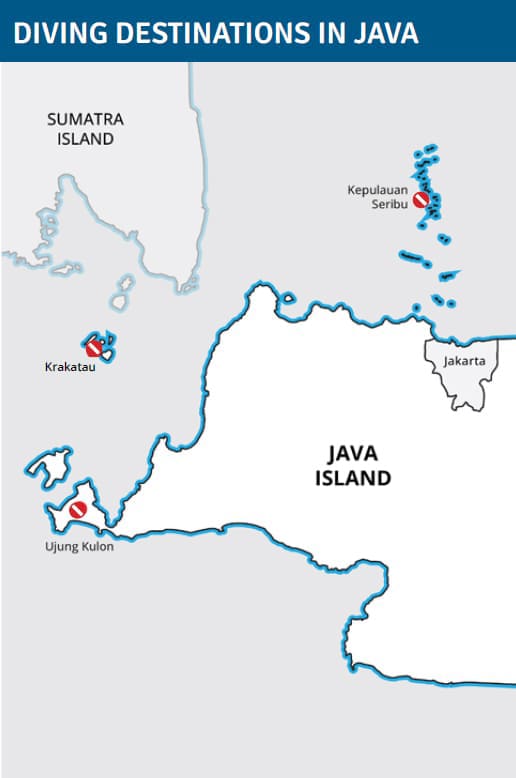 Java, Indonesia’s fifth-largest island, is the world’s most populous, with over 145 million residents. Located between Sumatra and Bali, it features a volcanic landscape of rainforests, fertile highlands, active volcanoes, and coastal cliffs. Java is the heart of Indonesia’s economy, politics, and culture. The island has a tropical climate, with temperatures ranging from 22°C - 29°C and a wet season from October to April. Its population is ethnically diverse, primarily Javanese and Sundanese, and predominantly Muslim. Javanese cuisine is primarily rice-based, mild, and slightly sweet, featuring staples such as tempeh, tofu, and chicken. Jakarta, the capital, sits on Java’s northwest coast. With over 11 million people, it's Southeast Asia’s most populous city. Jakarta is a vibrant blend of modernity and tradition, where skyscrapers tower over slums, and street vendors serve delicious meals for under a dollar. For travelers, the city is both a culture shock and a rewarding adventure.
Diving Overview
Diving in Java may lack the world-class visibility of other Indonesian sites—typically 5–10 meters, with less visibility during the rainy season—but it still offers unique experiences. Kepulauan Seribu near Jakarta provide tranquil dive spots, while Anak Krakatau offers a rare volcanic dive. Ujung Kulon National Park, a UNESCO Word Heritage Site, features rich marine biodiversity and is home to the endangered Javan rhinoceros.
Diving Conditions
Dive sites near Jakarta have limited visibility, which improves farther from shore but is often reduced by rain. Currents are generally mild, but they strengthen around the full moon. Kepulauan Seribu offer gentle drift dives suited for beginners, while Krakatau presents more challenging conditions for experienced divers.
Dive Site and Marine Life Highlights in JAVA
Dive sites near Jakarta host a diverse array of marine life, including sweetlips, batfish, moray eels, stingrays, angelfish, and parrotfish. Larger species—such as reef sharks, hawksbill turtles, tuna, and barracuda—are seen occasionally. Anak Krakatau stands out for its volcanic topography, featuring lava boulders, swim-throughs, and caverns that offer a unique geological dive experience. Wreck dives are available at both Kepulauan Seribu and Krakatau. Ujung Kulon National Park boasts a rich biodiversity, featuring diverse ecosystems such as coral reefs and mangroves. The main draw of these sites is their easy access from Jakarta, ideal for weekend divers.
JAVA The Land of Fertile Soils
Java, Indonesia’s fifth-largest island, is the world’s most populous, with over 145 million residents. Located between Sumatra and Bali, it features a volcanic landscape of rainforests, fertile highlands, active volcanoes, and coastal cliffs. Java is the heart of Indonesia’s economy, politics, and culture. The island has a tropical climate, with temperatures ranging from 22°C - 29°C and a wet season from October to April. Its population is ethnically diverse, primarily Javanese and Sundanese, and predominantly Muslim. Javanese cuisine is primarily rice-based, mild, and slightly sweet, featuring staples such as tempeh, tofu, and chicken. Jakarta, the capital, sits on Java’s northwest coast. With over 11 million people, it's Southeast Asia’s most populous city. Jakarta is a vibrant blend of modernity and tradition, where skyscrapers tower over slums, and street vendors serve delicious meals for under a dollar. For travelers, the city is both a culture shock and a rewarding adventure.
Diving Overview
Diving in Java may lack the world-class visibility of other Indonesian sites—typically 5–10 meters, with less visibility during the rainy season—but it still offers unique experiences. Kepulauan Seribu near Jakarta provide tranquil dive spots, while Anak Krakatau offers a rare volcanic dive. Ujung Kulon National Park, a UNESCO Word Heritage Site, features rich marine biodiversity and is home to the endangered Javan rhinoceros.
Diving Conditions
Dive sites near Jakarta have limited visibility, which improves farther from shore but is often reduced by rain. Currents are generally mild, but they strengthen around the full moon. Kepulauan Seribu offer gentle drift dives suited for beginners, while Krakatau presents more challenging conditions for experienced divers.
Dive Site and Marine Life Highlights in JAVA
Dive sites near Jakarta host a diverse array of marine life, including sweetlips, batfish, moray eels, stingrays, angelfish, and parrotfish. Larger species—such as reef sharks, hawksbill turtles, tuna, and barracuda—are seen occasionally. Anak Krakatau stands out for its volcanic topography, featuring lava boulders, swim-throughs, and caverns that offer a unique geological dive experience. Wreck dives are available at both Kepulauan Seribu and Krakatau. Ujung Kulon National Park boasts a rich biodiversity, featuring diverse ecosystems such as coral reefs and mangroves. The main draw of these sites is their easy access from Jakarta, ideal for weekend divers.
BALI The Land of Gods
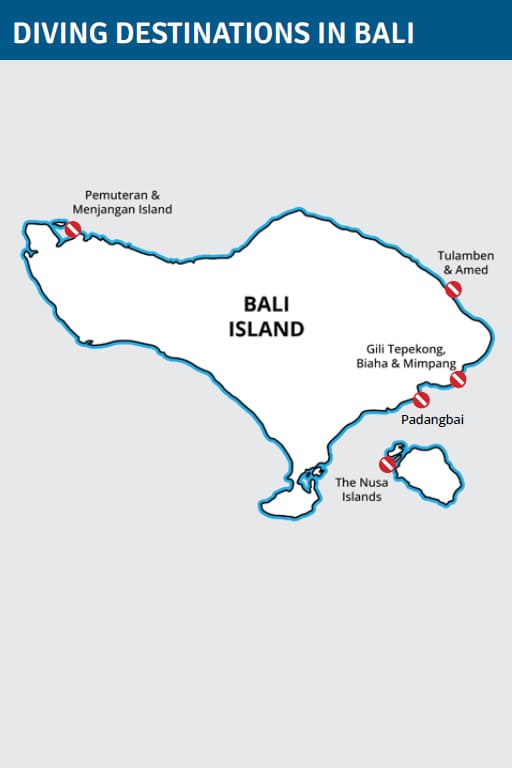 Bali, a compact island of 6,000 km², is rich in culture and natural beauty, stretching 153 km east–west and 112 km north– south. Home to over 4.3 million people (as of 2024), primarily Hindu, its culture blends Indian, Chinese, Hindu, and Buddhist influences, tracing back to the Majapahit Empire. Balinese Hinduism, rooted in Indian traditions, emphasizes balance between good and evil, shaping daily rituals and ceremonies. The island is also renowned for its traditional arts, including painting, sculpture, wood carving, and mask-making. Bali has a tropical climate, characterized by warm temperatures year-round, with an average temperature of 27°C. The wet season typically occurs from November to March.
Diving Overview
Bali offers diverse diving experiences, from tranquil bays to challenging sites with strong currents and thermoclines, suitable for all levels. Marine life is abundant, with opportunities to see large pelagics like mola and manta rays, as well as macro wonders like pygmy seahorses, frogfish, and ghost pipefish, making Bali a top destination for both big fish and macro enthusiasts.
Diving Conditions
Diving conditions around Bali vary by location. Sites like Pemuteran, Menjangan, Amed, and Tulamben offer calm, beginner-friendly dives, while the Nusa Islands and Gili Tepekong can experience strong currents, especially during the full moon.
Dive Site and Marine Life Highlights in BALI
Bali’s dive sites cater to all interests. Spot manta rays and mola mola at Nusa Penida, macro life at Tulamben, sharks at Gili Tepekong, and turtles at Menjangan and Pemuteran. Wreck divers can explore the USAT Liberty and Kubu wrecks in Tulamben. For drift dives, head to Nusa Penida, Tepekong, or Mimpang. For relaxed diving, visit Menjangan, Pemuteran, or Bali’s east coast. Stay in southern Bali for vibrant nightlife and easy access to top sites, or visit Nusa Lembongan, Ceningan, and Penida for pristine tropical reefs.
BALI The Land of Gods
Bali, a compact island of 6,000 km², is rich in culture and natural beauty, stretching 153 km east–west and 112 km north– south. Home to over 4.3 million people (as of 2024), primarily Hindu, its culture blends Indian, Chinese, Hindu, and Buddhist influences, tracing back to the Majapahit Empire. Balinese Hinduism, rooted in Indian traditions, emphasizes balance between good and evil, shaping daily rituals and ceremonies. The island is also renowned for its traditional arts, including painting, sculpture, wood carving, and mask-making. Bali has a tropical climate, characterized by warm temperatures year-round, with an average temperature of 27°C. The wet season typically occurs from November to March.
Diving Overview
Bali offers diverse diving experiences, from tranquil bays to challenging sites with strong currents and thermoclines, suitable for all levels. Marine life is abundant, with opportunities to see large pelagics like mola and manta rays, as well as macro wonders like pygmy seahorses, frogfish, and ghost pipefish, making Bali a top destination for both big fish and macro enthusiasts.
Diving Conditions
Diving conditions around Bali vary by location. Sites like Pemuteran, Menjangan, Amed, and Tulamben offer calm, beginner-friendly dives, while the Nusa Islands and Gili Tepekong can experience strong currents, especially during the full moon.
Dive Site and Marine Life Highlights in BALI
Bali’s dive sites cater to all interests. Spot manta rays and mola mola at Nusa Penida, macro life at Tulamben, sharks at Gili Tepekong, and turtles at Menjangan and Pemuteran. Wreck divers can explore the USAT Liberty and Kubu wrecks in Tulamben. For drift dives, head to Nusa Penida, Tepekong, or Mimpang. For relaxed diving, visit Menjangan, Pemuteran, or Bali’s east coast. Stay in southern Bali for vibrant nightlife and easy access to top sites, or visit Nusa Lembongan, Ceningan, and Penida for pristine tropical reefs.
NUSA TENGGARA The Land of the Dragons
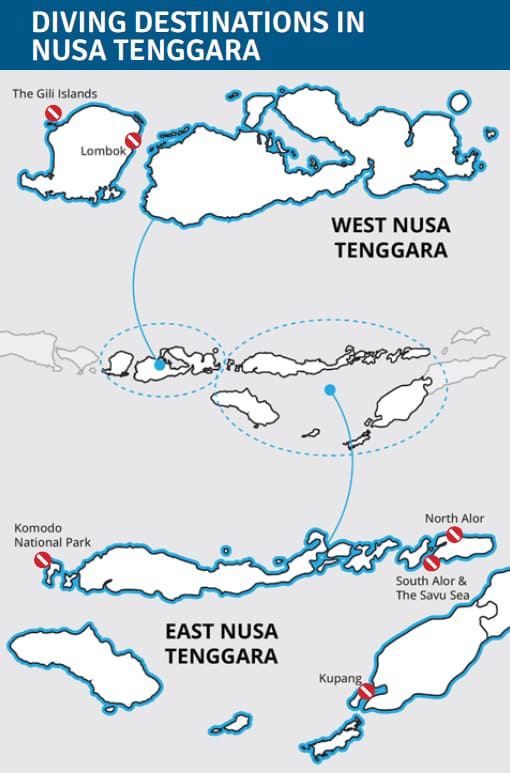 Nusa Tenggara, stretching from Lombok to Timor, boasts a diverse range of landscapes—from tropical forests to dry scrubland and varied underwater environments. Known for its endemic species, such as the Komodo Dragon, the region has a dry southern climate that supports farming and fishing, with minimal industry and mass tourism. The northern islands grow rice, while the south relies on drought-resistant crops. The main cities are Mataram and Kupang, with travel between islands accessible by plane or boat.
Western Nusa Tenggara Diving Overview
Western Nusa Tenggara offers a wide range of diving conditions—from calm, beginner-friendly waters in the Gili Islands to strong currents in South Lombok and Alor. With its diverse topography and rich marine life, the region suits divers of all levels. Conditions vary by location, so refer to area-specific guides for details. In remote areas, dive gear may be limited; bring your own or notify the operators in advance. Most dives are non-decompression, with depth limits of 25–30 meters and typical durations of 60 minutes. Some liveaboards require Nitrox certification. Visibility and temperature can vary, so check with local operators and pack extra thermal layers if needed.
Diving Conditions
Western Nusa Tenggara is famed for exhilarating drift dives in the strong currents of the Komodo and Sape Straits. Divers encounter vibrant coral walls, pinnacles, reef flats, and pelagic-rich cleaning stations. While many sites suit experienced divers, sheltered areas around the Gilis and northern Komodo offer ideal conditions for beginners and training.
Dive Site and Marine Life Highlights in Western NUSA TENGGARA
The Gili Islands offer crystal-clear waters, vibrant corals, and abundant reef life—perfect for divers of all levels. For more advanced dives, Shark Point and Deep Turbo offer deeper and more challenging conditions. Lombok boasts a diverse range of sites, from serene reefs and muck dives to pinnacles teeming with hammerhead sharks and mobula rays, catering to every diver's preference. Western Nusa Tenggara is also excellent for freediving, with the Gili Islands hosting schools for all levels. Gili Islands offers freedivers a chance to swim with manta rays, while Sekotong features colorful, beginner-friendly reefs.
Eastern Nusa Tenggara Diving Overview
Eastern Nusa Tenggara offers a more remote travel experience, with dive resorts typically requiring advance booking. Liveaboards, ranging from budget to luxury, operate across Nusa Tenggara—some covering Raja Ampat and Maluku, while others focus on Komodo, with trips lasting 3 - 14 days. Komodo National Park is a premier dive destination, home to manta rays, sharks, and vibrant reefs. While some sites have strong currents, there are also calmer spots suitable for all levels. The best time to dive is during the dry season (March to December), with October and November often providing the best conditions.
Diving Conditions
Eastern Nusa Tenggara offers dramatic topography and powerful, shifting currents. Alor is a highlight, known for pristine reefs, large fish, and rare critters like rhinopias. Most sites are suitable for intermediate to advanced divers, although sheltered spots are also available for beginners.
Dive Site and Marine Life Highlights in Eastern NUSA TENGGARA
The Alor Archipelago boasts remote dive sites teeming with marine life, ranging from coral seamounts and muck dives to walls and drop-offs. Healthy reefs and abundant fish create a unique, uncrowded experience. Cavern and cave divers can explore Oehani and Crystal Caves near Kupang. For snorkelers and freedivers, North and South Alor offer pristine beaches and quiet snorkeling spots far from typical tourist crowds.
NUSA TENGGARA The Land of the Dragons
Nusa Tenggara, stretching from Lombok to Timor, boasts a diverse range of landscapes—from tropical forests to dry scrubland and varied underwater environments. Known for its endemic species, such as the Komodo Dragon, the region has a dry southern climate that supports farming and fishing, with minimal industry and mass tourism. The northern islands grow rice, while the south relies on drought-resistant crops. The main cities are Mataram and Kupang, with travel between islands accessible by plane or boat.
Western Nusa Tenggara Diving Overview
Western Nusa Tenggara offers a wide range of diving conditions—from calm, beginner-friendly waters in the Gili Islands to strong currents in South Lombok and Alor. With its diverse topography and rich marine life, the region suits divers of all levels. Conditions vary by location, so refer to area-specific guides for details. In remote areas, dive gear may be limited; bring your own or notify the operators in advance. Most dives are non-decompression, with depth limits of 25–30 meters and typical durations of 60 minutes. Some liveaboards require Nitrox certification. Visibility and temperature can vary, so check with local operators and pack extra thermal layers if needed.
Diving Conditions
Western Nusa Tenggara is famed for exhilarating drift dives in the strong currents of the Komodo and Sape Straits. Divers encounter vibrant coral walls, pinnacles, reef flats, and pelagic-rich cleaning stations. While many sites suit experienced divers, sheltered areas around the Gilis and northern Komodo offer ideal conditions for beginners and training.
Dive Site and Marine Life Highlights in Western NUSA TENGGARA
The Gili Islands offer crystal-clear waters, vibrant corals, and abundant reef life—perfect for divers of all levels. For more advanced dives, Shark Point and Deep Turbo offer deeper and more challenging conditions. Lombok boasts a diverse range of sites, from serene reefs and muck dives to pinnacles teeming with hammerhead sharks and mobula rays, catering to every diver's preference. Western Nusa Tenggara is also excellent for freediving, with the Gili Islands hosting schools for all levels. Gili Islands offers freedivers a chance to swim with manta rays, while Sekotong features colorful, beginner-friendly reefs.
Eastern Nusa Tenggara Diving Overview
Eastern Nusa Tenggara offers a more remote travel experience, with dive resorts typically requiring advance booking. Liveaboards, ranging from budget to luxury, operate across Nusa Tenggara—some covering Raja Ampat and Maluku, while others focus on Komodo, with trips lasting 3 - 14 days. Komodo National Park is a premier dive destination, home to manta rays, sharks, and vibrant reefs. While some sites have strong currents, there are also calmer spots suitable for all levels. The best time to dive is during the dry season (March to December), with October and November often providing the best conditions.
Diving Conditions
Eastern Nusa Tenggara offers dramatic topography and powerful, shifting currents. Alor is a highlight, known for pristine reefs, large fish, and rare critters like rhinopias. Most sites are suitable for intermediate to advanced divers, although sheltered spots are also available for beginners.
Dive Site and Marine Life Highlights in Eastern NUSA TENGGARA
The Alor Archipelago boasts remote dive sites teeming with marine life, ranging from coral seamounts and muck dives to walls and drop-offs. Healthy reefs and abundant fish create a unique, uncrowded experience. Cavern and cave divers can explore Oehani and Crystal Caves near Kupang. For snorkelers and freedivers, North and South Alor offer pristine beaches and quiet snorkeling spots far from typical tourist crowds.
KALIMANTAN The Lungs of the Earth
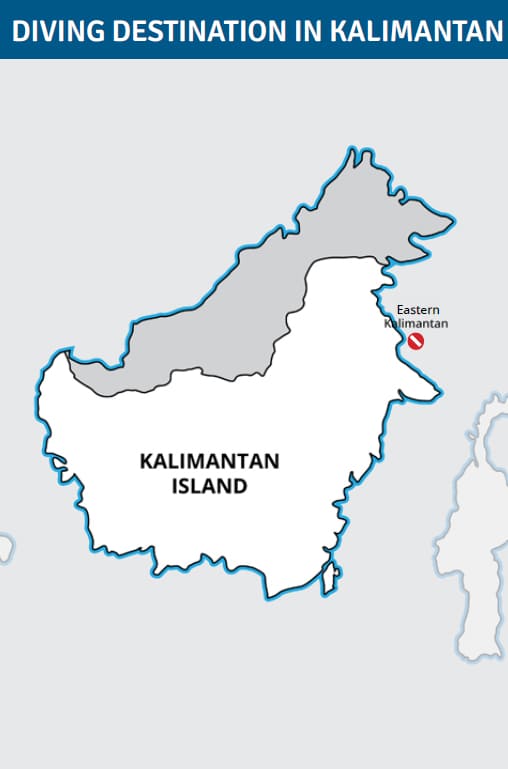 Kalimantan, the Indonesian part of Borneo—the world’s third-largest island— covers around 580,000 km² but is home to just 12 million people. Much of its interior remains pristine, sheltering some of the planet’s most crucial rainforests, often called the “lungs of the Earth.” These forests play a vital role in absorbing carbon, preserving biodiversity, and providing refuge for endangered species, such as orangutans and clouded leopards. Their connection to coastal ecosystems also supports regional ecological health. Eastern Kalimantan, particularly around the Derawan Islands, offers exceptional diving. Rich coral reefs, diverse marine life, and sites like Turtle Town and Karang Uncharted make it a haven for underwater explorers. Extensive mangroves and strong conservation efforts further establish it as a top choice for eco-conscious travelers.
Diving Overview
Diving in Kalimantan promises an extraordinary underwater adventure, though it requires more planning than popular spots like Bali, where dive trips and accommodations are often easily arranged on arrival.
Diving Conditions
Kalimantan offers diverse and unspoiled dive sites, from vibrant coral gardens to the unique marine ecosystems of the Derawan Archipelago, including Maratua, Kakaban, and Sangalaki. While dive centers and infrastructure are limited, careful planning ensures access to some of Indonesia’s most stunning and secluded underwater experiences
Dive Site and Marine Life Highlights in KALIMANTAN
The Derawan Archipelago in Eastern Kalimantan offers some of Indonesia’s most diverse and rewarding diving and snorkeling experiences, spanning the islands of Derawan, Sangalaki, Kakaban, and Maratua. Derawan is renowned for its rich marine life and turtle nesting beaches, while Sangalaki boasts vibrant reefs and year-round sightings of the graceful reef mantas. Kakaban stands out with its one-of-a-kind stingless Jellyfish Lake and thrilling pelagic encounters. Maratua offers exhilarating drift dives, dramatic drop-offs, and the opportunity to see large marine species, including barracuda, reef sharks, and even seasonal whale sharks. Snorkelers and freedivers will find plenty to love here too—calm coral gardens, surface-level manta encounters, and Kakaban’s surreal jellyfish lagoon.
KALIMANTAN The Lungs of the Earth
Kalimantan, the Indonesian part of Borneo—the world’s third-largest island— covers around 580,000 km² but is home to just 12 million people. Much of its interior remains pristine, sheltering some of the planet’s most crucial rainforests, often called the “lungs of the Earth.” These forests play a vital role in absorbing carbon, preserving biodiversity, and providing refuge for endangered species, such as orangutans and clouded leopards. Their connection to coastal ecosystems also supports regional ecological health. Eastern Kalimantan, particularly around the Derawan Islands, offers exceptional diving. Rich coral reefs, diverse marine life, and sites like Turtle Town and Karang Uncharted make it a haven for underwater explorers. Extensive mangroves and strong conservation efforts further establish it as a top choice for eco-conscious travelers.
Diving Overview
Diving in Kalimantan promises an extraordinary underwater adventure, though it requires more planning than popular spots like Bali, where dive trips and accommodations are often easily arranged on arrival.
Diving Conditions
Kalimantan offers diverse and unspoiled dive sites, from vibrant coral gardens to the unique marine ecosystems of the Derawan Archipelago, including Maratua, Kakaban, and Sangalaki. While dive centers and infrastructure are limited, careful planning ensures access to some of Indonesia’s most stunning and secluded underwater experiences
Dive Site and Marine Life Highlights in KALIMANTAN
The Derawan Archipelago in Eastern Kalimantan offers some of Indonesia’s most diverse and rewarding diving and snorkeling experiences, spanning the islands of Derawan, Sangalaki, Kakaban, and Maratua. Derawan is renowned for its rich marine life and turtle nesting beaches, while Sangalaki boasts vibrant reefs and year-round sightings of the graceful reef mantas. Kakaban stands out with its one-of-a-kind stingless Jellyfish Lake and thrilling pelagic encounters. Maratua offers exhilarating drift dives, dramatic drop-offs, and the opportunity to see large marine species, including barracuda, reef sharks, and even seasonal whale sharks. Snorkelers and freedivers will find plenty to love here too—calm coral gardens, surface-level manta encounters, and Kakaban’s surreal jellyfish lagoon.
SULAWESI The Land of Thousands Megalith
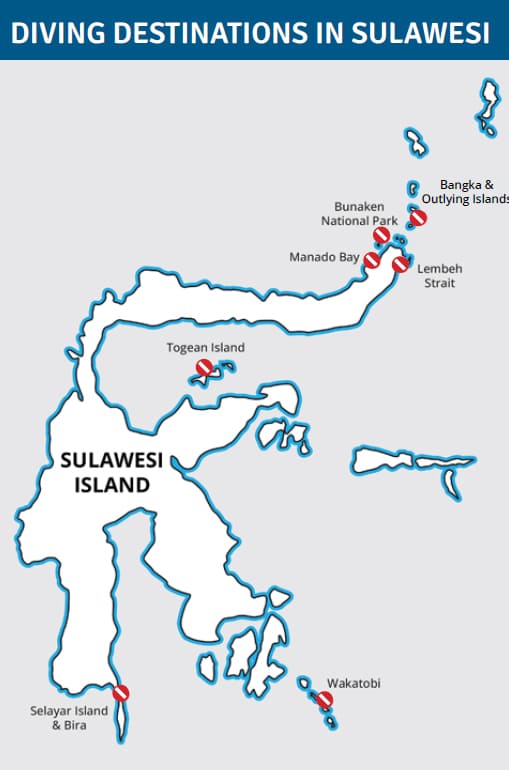 Sulawesi, Indonesia’s fourth-largest island, is renowned for its rich biodiversity, cultural diversity, and world-class diving. Spanning six provinces, its landscapes range from pristine coastlines to lush mountains and fertile plains. The island is home to distinct ethnic groups, including the Toraja, Bugis, and Minahasa, which reflect a blend of Muslim and Christian communities. Cultural and historical highlights include ancient megaliths in Tana Toraja and Minahasa. Encircled by vibrant seas, Sulawesi offers premier diving across its northern, central, and southern coasts. Inland,agriculture and fishing thrive, supported by vast natural resources including gold and nickel. With its striking geography, deep-rooted traditions, and marine richness, Sulawesi offers an unforgettable journey for both cultural explorers and diving enthusiasts.
Central & Southern Sulawesi Diving Overview
Central and Southern Sulawesi are home to some of Indonesia’s most untouched beaches and premier dive sites. Destinations like Selayar, Bira, Wakatobi, and the Togean Islands offer dramatic walls and exceptional coral diversity, characteristic of their location within the heart of the Coral Triangle. Diving is possible year-round, with generally clear visibility, calm seas, and less rainfall than many other regions of Indonesia. Selayar, however, operates seasonally from October to May, as swells from May to September can limit access to its eastern coast.
Diving Conditions
Diving around Sulawesi is generally easy, with mild currents and deep wall dives teeming with marine life and vibrant corals. Snorkeling and freediving in Central and Southern Sulawesi reveal pristine reefs, warm waters, and encounters with turtles, rays, and even whale sharks. Though remote, these uncrowded sites offer a truly off-the-beaten-path underwater experience
Dive Site and Marine Life Highlights Central & Southern SULAWESI
Exploring Sulawesi's waters reveals vibrant reefs, dramatic walls, and an incredible diversity of marine life, featuring hundreds of fish and coral species. Wakatobi dazzles with its colorful, biodiverse reefs, while Selayar offers rich macro life and sightings of sharks, including hammerheads and grey reefs. Bira delivers adrenaline-pumping drifts and pelagic encounters, and the Togean Islands provide calm, scenic dives ideal for all levels. In Gorontalo, healthy coral formations and the chance to see whale sharks add to Sulawesi’s underwater allure.
Northern Sulawesi Diving Overview
Northern Sulawesi offers some of Indonesia’s most diverse and rewarding diving, from the world-renowned muck sites of Lembeh Strait to the dramatic walls of Bunaken and the vibrant coral reefs around Bangka and Gangga. Situated along a migratory route, the region also offers whale sightings and frequent dolphin encounters, alongside a diverse array of marine life that spans from tiny critters in Lembeh to large pelagics in Bunaken. Shipwrecks in Manado Bay adds further variety, making this a top destination for both macro and wide-angle underwater
photography.
Diving Conditions
Diving in Northern Sulawesi is generally calm and beginner-friendly, offering a range of sites that vary from steep walls to gentle sandy slopes. While most areas offer easy conditions, currents can pick up around Bunaken, Bangka, and Gangga, especially during full moons. Lembeh Strait and Manado Bay are typically sheltered, though wind and swell may occasionally affect shore dives. Bunaken’s geography ensures that at least one side remains diveable in most weather. Visibility is consistently good on reefs and walls year-round but can drop at muck sites like Lembeh during the rainy season due to runoff. Bunaken also offers excellent snorkeling and freediving, with frequent sightings of turtles, sea snakes, and vibrant coral gardens. Lembeh’s critter-rich waters often have lower visibility, though the north and east sides tend to be clearer. Bangka and Gangga deliver strong visibility and rich marine diversity, making them ideal for divers of all levels.
Dive Site and Marine Life Highlights Northern SULAWESI
Northern Sulawesi is teeming with marine life, offering encounters with dolphins, pilot whales, seasonal sperm whales, and dugongs, particularly around Bangka and Bunaken. Bunaken is primarily known for its abundant green sea turtles. At the same time, Lembeh Strait has earned global acclaim for muck diving, revealing rare and elusive critters such as blue-ring octopuses, pygmy seahorses, hairy frogfish, and flamboyant cuttlefish. Theregion is also home to unique endemic species, including the Lembeh sea dragon and the Banggai cardinalfish.
SULAWESI The Land of Thousands Megalith
Sulawesi, Indonesia’s fourth-largest island, is renowned for its rich biodiversity, cultural diversity, and world-class diving. Spanning six provinces, its landscapes range from pristine coastlines to lush mountains and fertile plains. The island is home to distinct ethnic groups, including the Toraja, Bugis, and Minahasa, which reflect a blend of Muslim and Christian communities. Cultural and historical highlights include ancient megaliths in Tana Toraja and Minahasa. Encircled by vibrant seas, Sulawesi offers premier diving across its northern, central, and southern coasts. Inland,agriculture and fishing thrive, supported by vast natural resources including gold and nickel. With its striking geography, deep-rooted traditions, and marine richness, Sulawesi offers an unforgettable journey for both cultural explorers and diving enthusiasts.
Central & Southern Sulawesi Diving Overview
Central and Southern Sulawesi are home to some of Indonesia’s most untouched beaches and premier dive sites. Destinations like Selayar, Bira, Wakatobi, and the Togean Islands offer dramatic walls and exceptional coral diversity, characteristic of their location within the heart of the Coral Triangle. Diving is possible year-round, with generally clear visibility, calm seas, and less rainfall than many other regions of Indonesia. Selayar, however, operates seasonally from October to May, as swells from May to September can limit access to its eastern coast.
Diving Conditions
Diving around Sulawesi is generally easy, with mild currents and deep wall dives teeming with marine life and vibrant corals. Snorkeling and freediving in Central and Southern Sulawesi reveal pristine reefs, warm waters, and encounters with turtles, rays, and even whale sharks. Though remote, these uncrowded sites offer a truly off-the-beaten-path underwater experience
Dive Site and Marine Life Highlights Central & Southern SULAWESI
Exploring Sulawesi's waters reveals vibrant reefs, dramatic walls, and an incredible diversity of marine life, featuring hundreds of fish and coral species. Wakatobi dazzles with its colorful, biodiverse reefs, while Selayar offers rich macro life and sightings of sharks, including hammerheads and grey reefs. Bira delivers adrenaline-pumping drifts and pelagic encounters, and the Togean Islands provide calm, scenic dives ideal for all levels. In Gorontalo, healthy coral formations and the chance to see whale sharks add to Sulawesi’s underwater allure.
Northern Sulawesi Diving Overview
Northern Sulawesi offers some of Indonesia’s most diverse and rewarding diving, from the world-renowned muck sites of Lembeh Strait to the dramatic walls of Bunaken and the vibrant coral reefs around Bangka and Gangga. Situated along a migratory route, the region also offers whale sightings and frequent dolphin encounters, alongside a diverse array of marine life that spans from tiny critters in Lembeh to large pelagics in Bunaken. Shipwrecks in Manado Bay adds further variety, making this a top destination for both macro and wide-angle underwater
photography.
Diving Conditions
Diving in Northern Sulawesi is generally calm and beginner-friendly, offering a range of sites that vary from steep walls to gentle sandy slopes. While most areas offer easy conditions, currents can pick up around Bunaken, Bangka, and Gangga, especially during full moons. Lembeh Strait and Manado Bay are typically sheltered, though wind and swell may occasionally affect shore dives. Bunaken’s geography ensures that at least one side remains diveable in most weather. Visibility is consistently good on reefs and walls year-round but can drop at muck sites like Lembeh during the rainy season due to runoff. Bunaken also offers excellent snorkeling and freediving, with frequent sightings of turtles, sea snakes, and vibrant coral gardens. Lembeh’s critter-rich waters often have lower visibility, though the north and east sides tend to be clearer. Bangka and Gangga deliver strong visibility and rich marine diversity, making them ideal for divers of all levels.
Dive Site and Marine Life Highlights Northern SULAWESI
Northern Sulawesi is teeming with marine life, offering encounters with dolphins, pilot whales, seasonal sperm whales, and dugongs, particularly around Bangka and Bunaken. Bunaken is primarily known for its abundant green sea turtles. At the same time, Lembeh Strait has earned global acclaim for muck diving, revealing rare and elusive critters such as blue-ring octopuses, pygmy seahorses, hairy frogfish, and flamboyant cuttlefish. Theregion is also home to unique endemic species, including the Lembeh sea dragon and the Banggai cardinalfish.
MALUKU The Land of Spices
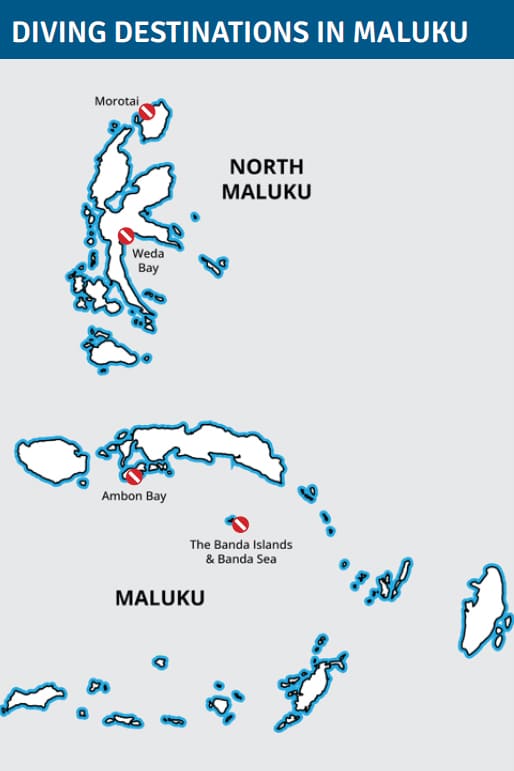 The Maluku Islands, also known as the Spice Islands, lie between Sulawesi and Papua, spanning over 850,000 km², mostly ocean. Shaped by tectonic forces, the region boasts volcanic peaks, rainforests, coral reefs, and a rich biodiversity, featuring many endemic species. Historically prized for nutmeg and cloves, Maluku was a center of colonial rivalry before becoming part of Indonesia. Now divided into North Maluku and Maluku provinces, the region is home to approximately 3 million people living in harmony. With its varied climates and fertile land, agriculture remains vital, producing a range of products including spices, sago, rice, and seafood. Papeda with fish soup is a well-known regional dish.
Diving Overview
Diving in the Maluku Islands requires more planning than in established destinations like Bali, but the rewards are substantial. With few dive centers and resorts, early arrangements are essential to access the region’s remote and pristine underwater sites.
Diving Conditions
Dive sites vary widely, from deep atoll walls in Halmahera to shallow muck slopes in Ambon, featuring both vibrant reefs and rare macro life. Some operators pause between June and September due to reduced visibility during the wet monsoon season, so it’s best to check ahead if you plan to visit during this time.
Dive Site and Marine Life Highlights in MALUKU
Maluku offers a remarkable diversity of diving experiences for all skill levels and interests. Ambon Bay is renowned for macro photography, home to rare species like the psychedelic frogfish. In contrast, Weda Bay in Halmahera features dramatic walls, giant gorgonians, and regular pelagic sightings—perfect for wide-angle enthusiasts. The Banda Sea, a favorite destination for liveaboards, showcases pristine reefs, schooling hammerhead sharks, and frequent encounters with whales and dolphins. From May to September, North Halmahera’s islands, including Rao and Morotai, reveal varied underwater landscapes—from shallow coral gardens to deep walls teeming with marine life. Snorkelers and freedivers will enjoy the clear, vibrant waters of Weda and the Banda Sea. Though more challenging, snorkeling in Ambon Bay can yield sightings of Indonesia’s rarest marine species. With low visitor numbers, sites like Weda Bay, Morotai, and the Banda Sea offer tranquil, crowd-free diving in some of the country’s most untouched waters.
MALUKU The Land of Spices
The Maluku Islands, also known as the Spice Islands, lie between Sulawesi and Papua, spanning over 850,000 km², mostly ocean. Shaped by tectonic forces, the region boasts volcanic peaks, rainforests, coral reefs, and a rich biodiversity, featuring many endemic species. Historically prized for nutmeg and cloves, Maluku was a center of colonial rivalry before becoming part of Indonesia. Now divided into North Maluku and Maluku provinces, the region is home to approximately 3 million people living in harmony. With its varied climates and fertile land, agriculture remains vital, producing a range of products including spices, sago, rice, and seafood. Papeda with fish soup is a well-known regional dish.
Diving Overview
Diving in the Maluku Islands requires more planning than in established destinations like Bali, but the rewards are substantial. With few dive centers and resorts, early arrangements are essential to access the region’s remote and pristine underwater sites.
Diving Conditions
Dive sites vary widely, from deep atoll walls in Halmahera to shallow muck slopes in Ambon, featuring both vibrant reefs and rare macro life. Some operators pause between June and September due to reduced visibility during the wet monsoon season, so it’s best to check ahead if you plan to visit during this time.
Dive Site and Marine Life Highlights in MALUKU
Maluku offers a remarkable diversity of diving experiences for all skill levels and interests. Ambon Bay is renowned for macro photography, home to rare species like the psychedelic frogfish. In contrast, Weda Bay in Halmahera features dramatic walls, giant gorgonians, and regular pelagic sightings—perfect for wide-angle enthusiasts. The Banda Sea, a favorite destination for liveaboards, showcases pristine reefs, schooling hammerhead sharks, and frequent encounters with whales and dolphins. From May to September, North Halmahera’s islands, including Rao and Morotai, reveal varied underwater landscapes—from shallow coral gardens to deep walls teeming with marine life. Snorkelers and freedivers will enjoy the clear, vibrant waters of Weda and the Banda Sea. Though more challenging, snorkeling in Ambon Bay can yield sightings of Indonesia’s rarest marine species. With low visitor numbers, sites like Weda Bay, Morotai, and the Banda Sea offer tranquil, crowd-free diving in some of the country’s most untouched waters.
PAPUA The Last Paradise on Earth
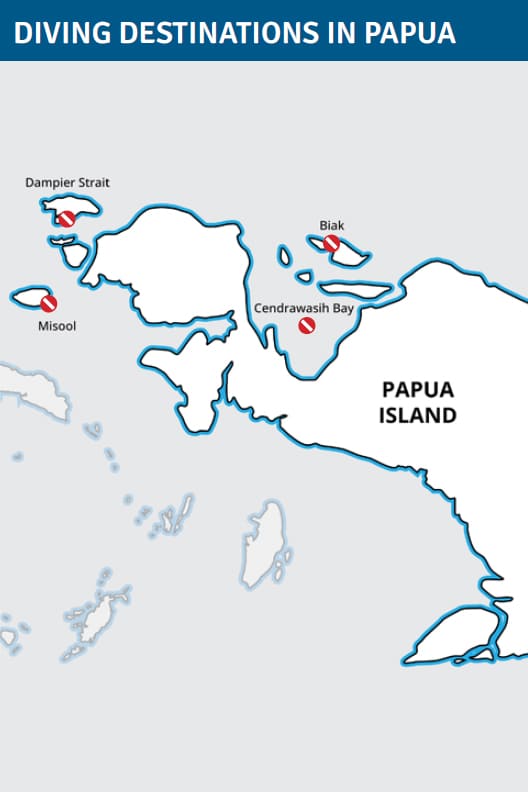 Papua, Indonesia’s easternmost region, boasts a striking natural variety, ranging from tropical beaches and mangroves to alpine peaks and dense rainforests. Formerly known as Irian Jaya, it is now divided into six provinces. The climate is consistently hot and humid, shaped by rugged terrain and a rich biodiversity. Located on the same tectonic plate as Australia, Papua is home to marsupials like tree kangaroos and wallabies, along with many endemic species. It played a key role in Alfred Wallace’s theory of evolution and the concept of the Wallace Line. The region is inhabited by hundreds of indigenous tribes, with traditional ceremonies and festivals such as the Baliem Valley Festival offering insight into its vibrant cultures. Raja Ampat, Cenderawasih Bay, and Biak are globally renowned dive sites, famous for their pristine reefs and encounters with whale sharks. With its cultural richness, untouched nature, and world-class diving, Papua remains a paradise for adventurers seeking raw and unforgettable experiences.
Diving Overview
Raja Ampat ranks among the world’s premier dive destinations, renowned for its untouched reefs, high fish biomass, endemic species, and exceptional encounters with pelagic species. Its varied underwater topography— walls, slopes, canyons, and sheltered lagoons—offers something for all skill levels. Divers are treated to vivid coral gardens, dense schools of reef fish, and frequent sightings of sharks and tunas. The prime season runs from October to June. Its remote location has helped shield it from mass tourism, keeping the reefs intact. Approximately half of the region falls within Marine Protected Areas, which are funded in part by a conservation tag system linked to tourism. Due to limited capacity, early booking is essential for both liveaboards and resorts.
Diving Conditions
Papua’s remote location results in limited phone service and slow, often unreliable internet access. While the region boasts exceptional natural beauty and marine biodiversity, certain areas have been affected by destructive fishing practices. Diving in Papua offers warm water and excellent visibility year-round, particularly in regions like Raja Ampat.
Dive Site and Marine Life Highlights in PAPUA
Papua offers unmatched marine diversity, featuring manta rays, reef and walking sharks, turtles, wobbegongs, pygmy seahorses, nudibranchs, and untouched coral reefs. Signature dive sites such as Blue Magic, Manta Sandy, Sardine Reef, and Cape Kri showcase the region’s biodiversity, while Misool’s iconic sites like Boo and Magic Mountain stand out for their dramatic topography and thriving marine life.
PAPUA The Last Paradise on Earth
Papua, Indonesia’s easternmost region, boasts a striking natural variety, ranging from tropical beaches and mangroves to alpine peaks and dense rainforests. Formerly known as Irian Jaya, it is now divided into six provinces. The climate is consistently hot and humid, shaped by rugged terrain and a rich biodiversity. Located on the same tectonic plate as Australia, Papua is home to marsupials like tree kangaroos and wallabies, along with many endemic species. It played a key role in Alfred Wallace’s theory of evolution and the concept of the Wallace Line. The region is inhabited by hundreds of indigenous tribes, with traditional ceremonies and festivals such as the Baliem Valley Festival offering insight into its vibrant cultures. Raja Ampat, Cenderawasih Bay, and Biak are globally renowned dive sites, famous for their pristine reefs and encounters with whale sharks. With its cultural richness, untouched nature, and world-class diving, Papua remains a paradise for adventurers seeking raw and unforgettable experiences.
Diving Overview
Raja Ampat ranks among the world’s premier dive destinations, renowned for its untouched reefs, high fish biomass, endemic species, and exceptional encounters with pelagic species. Its varied underwater topography— walls, slopes, canyons, and sheltered lagoons—offers something for all skill levels. Divers are treated to vivid coral gardens, dense schools of reef fish, and frequent sightings of sharks and tunas. The prime season runs from October to June. Its remote location has helped shield it from mass tourism, keeping the reefs intact. Approximately half of the region falls within Marine Protected Areas, which are funded in part by a conservation tag system linked to tourism. Due to limited capacity, early booking is essential for both liveaboards and resorts.
Diving Conditions
Papua’s remote location results in limited phone service and slow, often unreliable internet access. While the region boasts exceptional natural beauty and marine biodiversity, certain areas have been affected by destructive fishing practices. Diving in Papua offers warm water and excellent visibility year-round, particularly in regions like Raja Ampat.
Dive Site and Marine Life Highlights in PAPUA
Papua offers unmatched marine diversity, featuring manta rays, reef and walking sharks, turtles, wobbegongs, pygmy seahorses, nudibranchs, and untouched coral reefs. Signature dive sites such as Blue Magic, Manta Sandy, Sardine Reef, and Cape Kri showcase the region’s biodiversity, while Misool’s iconic sites like Boo and Magic Mountain stand out for their dramatic topography and thriving marine life.
Dive Accident Coverage